




What's Happening?
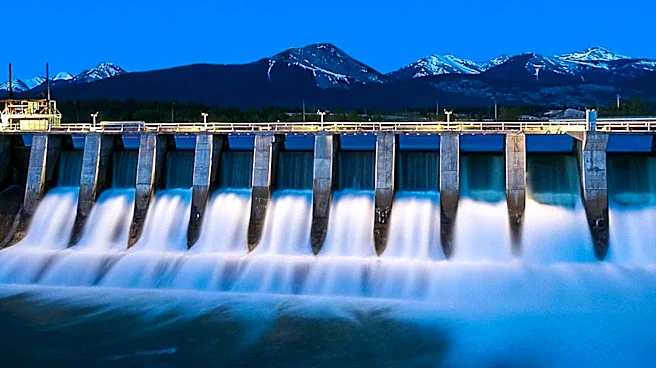
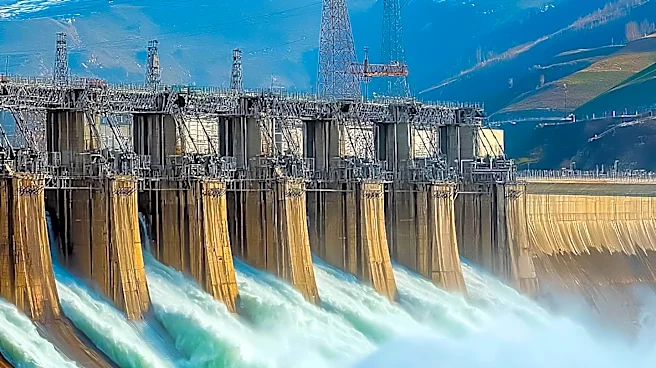
California Polytechnic State University (Cal Poly) emerged victorious in the 2026 Hydropower Collegiate Competition with their innovative in-conduit hydropower project. This competition, organized by the National Laboratory of the Rockies and funded by the U.S.
Department of Energy, challenges students to develop solutions for hydropower and marine energy issues. Cal Poly's project focused on extracting energy from a pressure-reducing station in the Sacramento Suburban Water District. The competition saw participation from numerous universities, with Southern Utah University and a tie between Purdue University and Northern Arizona University for second and third places, respectively. The event underscores the growing interest in hydropower and marine energy as viable future energy sources.
Why It's Important?
The competition highlights the increasing focus on renewable energy sources, particularly hydropower, as the U.S. seeks sustainable energy solutions. The hands-on experience provided to students fosters innovation and prepares a new generation of engineers and scientists to tackle energy challenges. The projects developed could lead to significant advancements in energy efficiency and sustainability, potentially reducing reliance on fossil fuels and decreasing environmental impact. The involvement of academic institutions in such competitions bridges the gap between education and industry, promoting collaboration and innovation in the energy sector.
What's Next?
With the success of the 2026 competition, the U.S. Department of Energy plans to continue supporting such initiatives, with a record number of teams already selected for the 2027 competition. This ongoing support is expected to further drive innovation and interest in hydropower and marine energy, potentially leading to new technologies and methods that could be implemented on a larger scale. The continued collaboration between academia and industry is likely to result in more practical applications of these technologies, contributing to the U.S.'s energy independence and sustainability goals.