


What's Happening?
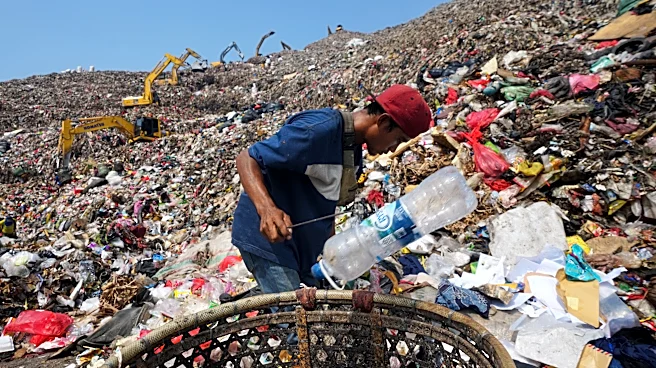
Indonesia is set to transform its largest landfill, Bantargebang, from open dumping to a controlled system starting August 1. This initiative is part of a national waste management plan aimed at improving environmental health and reducing methane emissions.
The government plans to shut down open-dumping operations at 343 disposal sites, transitioning them to controlled or sanitary landfill systems. Residents are encouraged to separate organic waste and recyclables, a practice not widely taught. Bantargebang, which emits significant methane, will undergo changes to cover waste with soil and tarps, reducing emissions and improving waste management.
Why It's Important?
Methane is a potent greenhouse gas, contributing significantly to global warming. Indonesia's efforts to reduce methane emissions from landfills are crucial in addressing climate change. By transitioning to controlled landfill systems, the country aims to improve air quality, reduce pollution, and contribute to global climate efforts. This initiative also highlights the importance of sustainable waste management practices and the role of government policies in driving environmental change. The success of this plan could serve as a model for other countries facing similar challenges.