
What's Happening?
Southeast Asia is experiencing a significant increase in coal demand, which is growing faster than in any other region globally. This trend is undermining efforts to reduce carbon emissions and combat
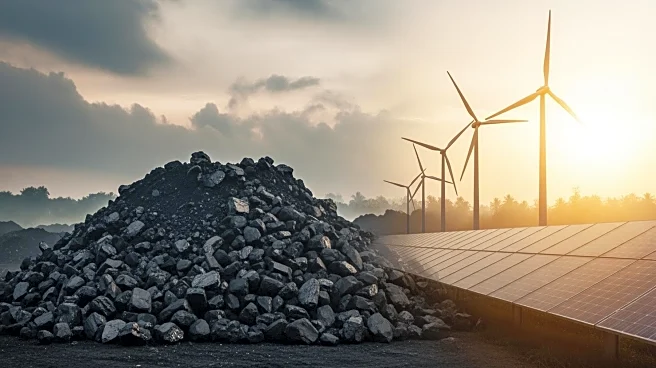
global warming. According to a report by the International Energy Agency, regional coal demand is expected to rise by over 4% annually through the end of the decade, driven by the growing electricity needs of expanding economies. Indonesia and Vietnam are major contributors to this demand, with Indonesia accounting for more than half. Despite signing $15.5 billion Just Energy Transition Partnerships (JETP) deals in 2022 to support renewable energy transitions, both countries continue to rely heavily on coal. This reliance is partly due to the cost and energy security that coal provides, as well as the existing infrastructure investments in fossil fuels.
Why It's Important?
The increasing coal demand in Southeast Asia poses significant challenges to global efforts to mitigate climate change. As coal is a major source of carbon emissions, its continued use in the region could hinder international climate goals, including those outlined in the Paris Climate Agreement. The situation in Southeast Asia is critical, as the region is already experiencing severe impacts from climate change, such as deadly floods and landslides. The reliance on coal also exacerbates air pollution issues, particularly in urban areas like Jakarta. The failure to transition away from coal in key countries like Indonesia could set a precedent for other developing nations, potentially stalling global progress towards cleaner energy solutions.
What's Next?
The future of Southeast Asia's energy landscape remains uncertain. While there are plans to expand renewable energy capacity, such as Vietnam's ambitious solar energy targets, the region's power grids face challenges due to underinvestment and the rapid rollout of renewables. The momentum for JETP-backed projects is unlikely to increase significantly in the near term, especially following Indonesia's decision to cancel the early retirement of a coal plant and the U.S. withdrawal from JETP under President Trump's administration. Moving forward, political commitment and substantial investment in infrastructure will be crucial to achieving a successful energy transition.
Beyond the Headlines
The ongoing reliance on coal in Southeast Asia highlights the complex interplay between economic development, energy security, and environmental sustainability. The region's struggle to balance these factors underscores the need for a nuanced approach to energy policy that considers both immediate economic needs and long-term environmental goals. Additionally, the situation raises ethical questions about the responsibility of developed nations to support developing countries in their energy transitions, particularly given the historical contributions of industrialized countries to global carbon emissions.