



What's Happening?
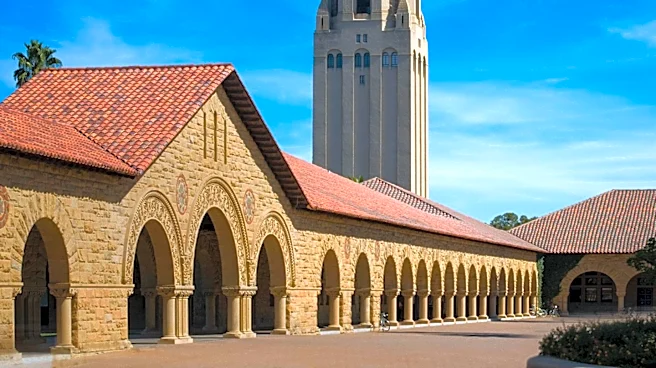
Supreme Court Justice Clarence Thomas stated that elite institutions, specifically naming Stanford Law School, are "presumptively off limits" to conservative figures like himself. Speaking at a Hoover Institution forum on August 11, Thomas asserted that such
campuses foster an environment of hostility towards conservative viewpoints. He claimed this reality extends to other institutions, including Yale Law School, and that denying it would be dishonest. This assertion comes after a March 2023 incident at Stanford Law School where federal appeals court Judge Kyle Duncan faced significant backlash from students, particularly those affiliated with LGBTQ groups, preventing him from completing a speech. The students used signs and bullhorns, and a DEI administrator, Tirien Steinbach, acknowledged Duncan's free speech rights but appeared to side with the protesters, questioning if the "juice was worth the squeeze." Stanford Dean Jenny Martinez and President Marc Tessier-Lavigne later issued a written apology to Judge Duncan regarding the incident.
Why It's Important?
Justice Thomas's comments highlight a growing concern regarding ideological diversity and free speech on U.S. university campuses, particularly within elite legal institutions. His statement suggests a perceived chilling effect on conservative voices in academic settings, which could have significant implications for intellectual discourse and the training of future legal professionals. If conservative legal scholars and judges feel unwelcome or unable to express their views freely at top law schools, it could lead to a more ideologically homogenous academic environment. This situation might also influence how legal education is perceived by different political factions, potentially deepening partisan divides in the legal field. The incident involving Judge Kyle Duncan at Stanford Law School serves as a concrete example of the challenges faced by speakers with controversial viewpoints, raising questions about the balance between free expression and student protest rights on university grounds.
What's Next?
In response to Justice Thomas's remarks, Stanford University issued a statement indicating that they would be "honored to host Justice Thomas at Stanford Law School." The statement highlighted that the Stanford Constitutional Law Center, directed by Professor Michael McConnell, regularly hosts members of the judiciary and that students and faculty would welcome the opportunity to engage with Justice Thomas's perspectives. This suggests an attempt by Stanford to counter the perception of hostility and encourage open dialogue. However, the underlying tensions regarding free speech and ideological differences on campus are likely to persist. Future events involving conservative speakers at universities, especially law schools, will likely be scrutinized for similar protests or attempts to disrupt speeches. The ongoing debate will continue to prompt discussions among university administrations, faculty, and students about fostering inclusive environments while upholding principles of free expression and academic freedom.
Beyond the Headlines
The broader implications of Justice Thomas's statements extend beyond individual campuses to the national discourse on intellectual freedom and the role of higher education in a diverse society. The perception that certain viewpoints are unwelcome in elite academic institutions can contribute to a sense of alienation among segments of the population and fuel criticisms of universities as echo chambers. This situation also raises fundamental questions about the purpose of higher education: whether it should primarily be a space for challenging ideas and fostering robust debate, or if it should prioritize creating a 'safe space' for all students, potentially at the expense of exposure to differing opinions. The incident at Stanford Law School, where a DEI administrator's actions were seen by some as condoning the disruption of a speech, further complicates the role of diversity, equity, and inclusion initiatives in relation to free speech principles. This ongoing tension could lead to re-evaluations of university policies and practices concerning campus protests and speaker invitations.