




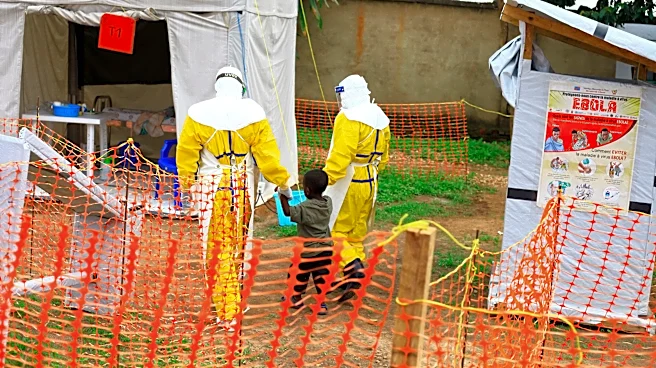
What's Happening?
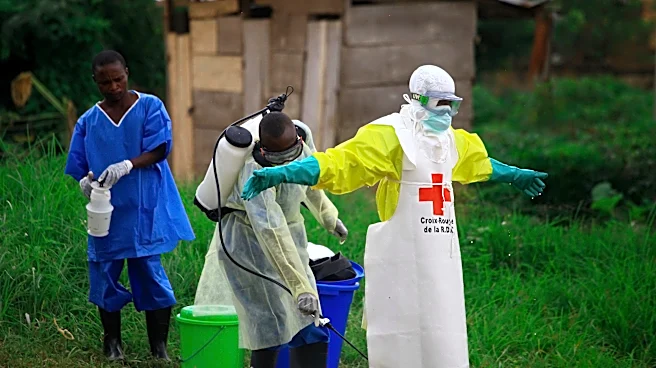
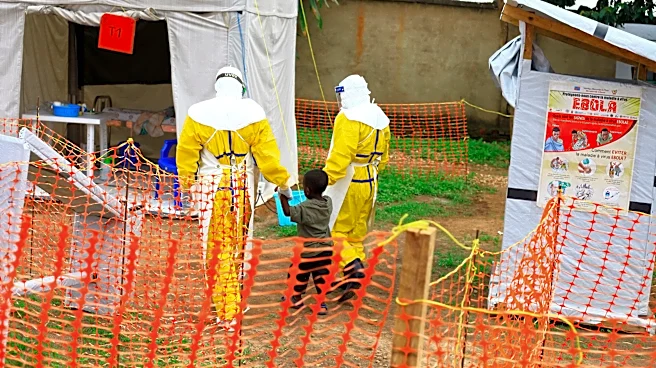
The Democratic Republic of the Congo (DRC) is experiencing a resurgence of the Ebola virus, with the World Health Organization (WHO) declaring it a 'public health emergency of international concern.' The outbreak, centered in the northeastern province
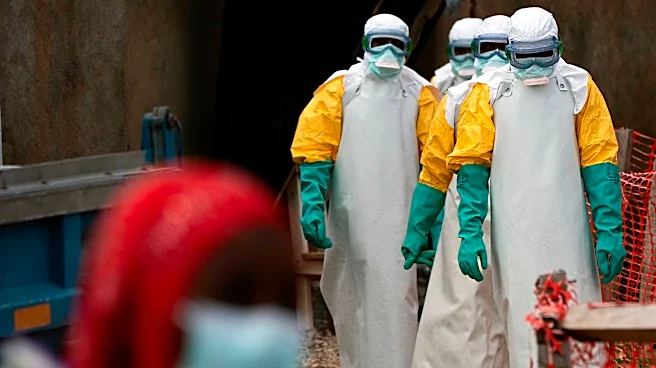
of Ituri, has resulted in over 300 suspected cases and 88 deaths. The Bundibugyo strain, a highly lethal type of Ebola virus, is spreading rapidly in the towns of Rwampara, Mongwalu, and Bunia. The situation is exacerbated by the region's ongoing humanitarian and security crises, which complicate containment efforts. Local health officials emphasize the need for prevention, early detection, and isolation of cases to control the outbreak. The DRC's Ministry of Health has identified a nurse as the suspected initial case, whose unsafe burial practices may have contributed to the virus's spread.
Why It's Important?
The resurgence of Ebola in the DRC poses significant challenges to public health and safety, not only within the country but also regionally. The outbreak threatens to strain the already fragile healthcare system in the DRC, which is grappling with limited resources and infrastructure. The rapid spread of the virus could lead to a large-scale public health disaster if not contained promptly. The situation underscores the importance of international cooperation and swift action to prevent the virus from spreading to neighboring countries. The outbreak also highlights the need for improved healthcare infrastructure and community engagement to address mistrust and misinformation, which can hinder containment efforts.
What's Next?
Efforts to contain the Ebola outbreak in the DRC will require coordinated regional action and support from international health organizations. The Africa Centre for Disease Control and Prevention (Africa CDC) stresses the importance of isolating suspected cases, tracing contacts, and strengthening cross-border surveillance. Local authorities are working to raise awareness about the disease and implement preventive measures, such as promoting hygiene protocols and discouraging unsafe burial practices. The success of these efforts will depend on community cooperation and the ability of health authorities to act swiftly. Failure to contain the outbreak could result in its spread to other regions, exacerbating the humanitarian crisis in the DRC.
Beyond the Headlines
The Ebola outbreak in the DRC highlights deeper issues related to healthcare access and infrastructure in conflict-affected regions. The ongoing violence and instability in Ituri province complicate response efforts, as armed groups control parts of the territory, limiting access for health workers. The outbreak also raises ethical concerns about the allocation of resources and attention to different health crises, as global focus may shift away from other pressing issues like the fungal infection drug shortage. Long-term solutions will require addressing the root causes of instability and improving healthcare systems to prevent future outbreaks.