





What's Happening?
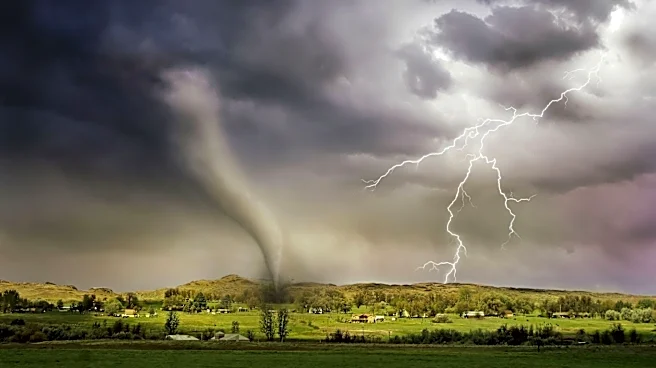
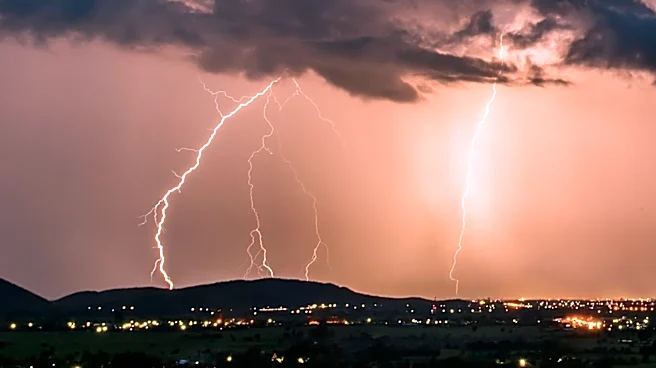
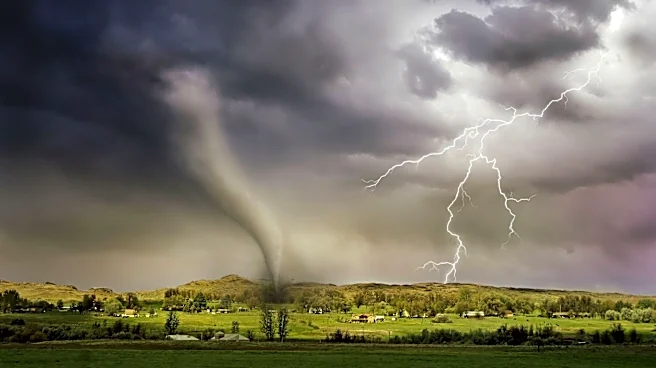
Severe thunderstorms have swept through parts of Illinois and Indiana, causing significant damage and power outages. The storms, which included wind gusts up to 99 mph, have been part of an unusually volatile weather year for the region. The National
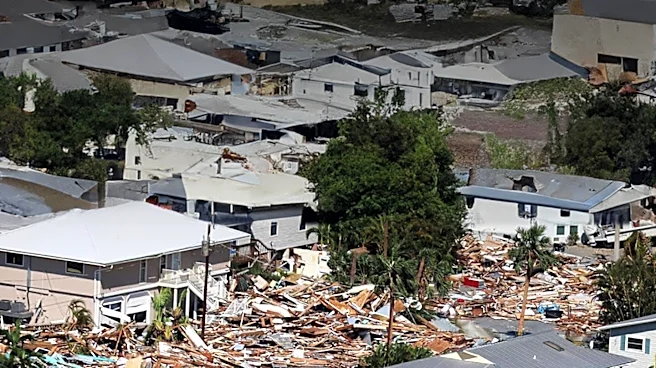
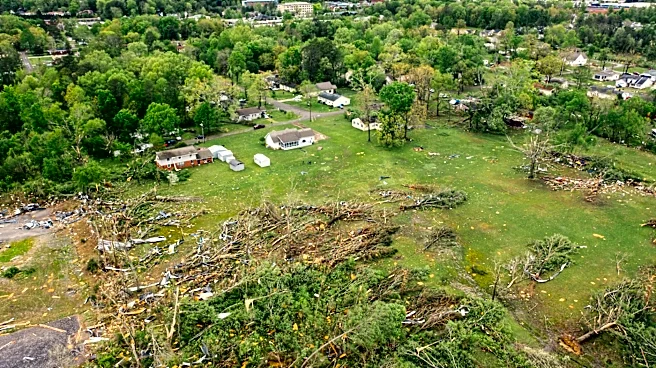
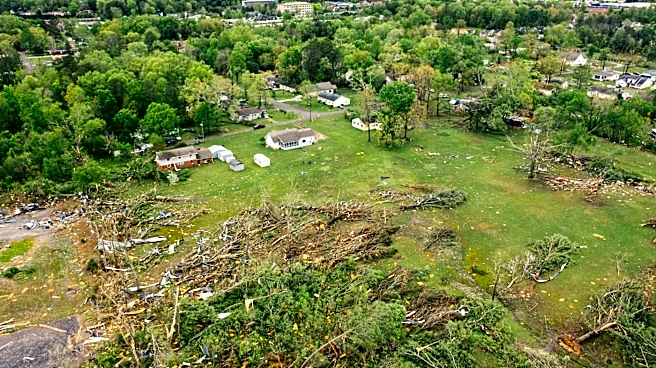
Weather Service issued a severe thunderstorm watch, warning of lightning, hail, and winds exceeding 60 mph. In the aftermath, more than 127,000 homes and businesses were left without power, with Cook and Will counties being the most affected. The storms have also caused structural damage, including downed trees and power lines, and have disrupted public transportation in northwest Indiana.
Why It's Important?
The severe weather highlights the increasing frequency and intensity of storms in the Midwest, potentially linked to climate change. The damage and power outages have significant implications for residents and local infrastructure, disrupting daily life and emergency services. The economic impact is also notable, with potential costs for repairs and recovery efforts. The situation underscores the need for improved infrastructure resilience and emergency preparedness in the face of extreme weather events.
What's Next?
Residents in affected areas are advised to remain cautious, especially around downed power lines and flooded streets. Utility companies are working to restore power, but the process may take time due to the extent of the damage. Meteorologists warn that the unsettled weather pattern may continue, with more storms possible in the coming days. Local governments and emergency services are likely to review and enhance their response strategies to better handle future severe weather events.