


What's Happening?
Researchers at the Icahn School of Medicine at Mount Sinai have discovered that blocking the aryl hydrocarbon receptor (AhR) can promote axon regeneration in neurons, potentially restoring function after peripheral nerve or spinal cord injuries. The study,
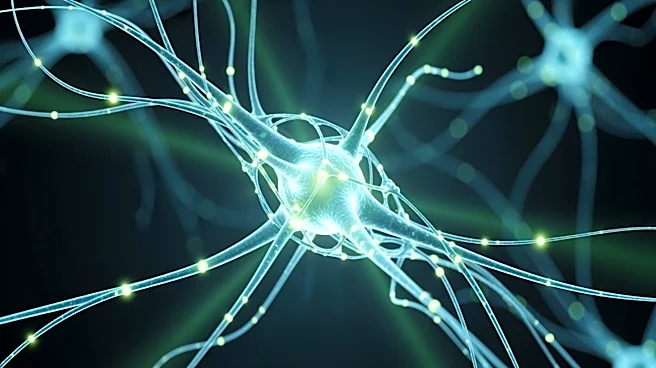
published in Nature, highlights AhR's role as a molecular switch that regulates the regrowth of damaged axonal fibers. AhR, initially identified as a sensor for environmental toxins, integrates environmental sensing with regenerative capabilities. When AhR signaling is active, axon growth slows, but inhibiting its activity with drugs enhances axonal fiber growth and improves recovery of motor and sensory function in mouse models. The research suggests potential treatment directions for spinal cord injury, stroke, and other neurological diseases, although further studies are needed to assess the effectiveness of AhR inhibitors in different types of neural damage.
Why It's Important?
The findings from Mount Sinai could have significant implications for treating neurological injuries, which often result in permanent loss of movement or sensation due to the limited ability of neurons in adult mammals to regrow damaged axonal connections. By identifying AhR as a brake on axon regeneration, the research opens new avenues for developing therapies that enhance neural recovery. This could lead to improved outcomes for patients suffering from spinal cord injuries, strokes, and other conditions affecting the nervous system. The potential use of AhR-blocking drugs, already in clinical trials for other diseases, could accelerate the development of effective treatments, offering hope for improved quality of life for affected individuals.
What's Next?
Future research will focus on testing AhR-blocking drugs and gene-therapy strategies to reduce the protein's activity in neurons. Scientists aim to determine the best timing and dosage for treatment and assess the impact on other cells after injury. These studies will help establish the clinical viability of AhR inhibition as a therapeutic approach for neural regeneration. The Mount Sinai team plans to explore the effectiveness of AhR inhibitors in various types of neural damage, potentially leading to new treatment protocols for neurological diseases.