








What's Happening?
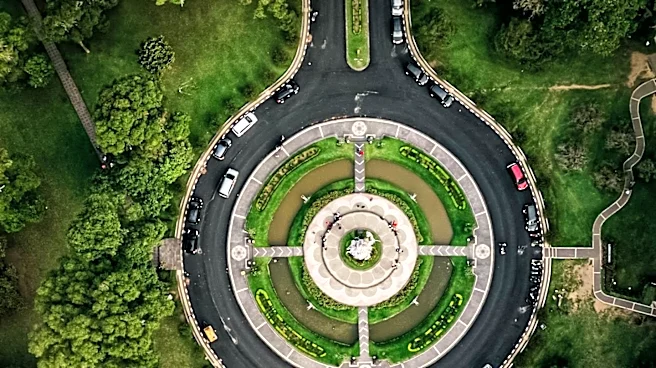
Hamilton County commissioners have awarded a $39.9 million contract to Carmel-based company Gradex for the construction of a new roundabout at Hazel Dell Parkway beneath 146th Street, spanning the Carmel and Noblesville areas. This significant infrastructure
project is slated to commence this fall and is expected to continue through 2029. The Indianapolis Metropolitan Planning Organization has contributed $8.7 million in funding towards this initiative. According to Hamilton County Highway Director Brad Davis, the primary objective of the Hazel Dell Road project is to alleviate traffic congestion along the heavily trafficked 146th Street corridor, which has been identified as having a high crash rate. This project mirrors the recently completed roundabout at Allisonville Road below 146th Street, located on the Fishers-Noblesville border, which was a $44 million investment. Hamilton County also has future plans for another roundabout interchange at 146th Street and Gray Road, near the Carmel-Noblesville-Westfield border, with $6 million already awarded by the Indianapolis Metropolitan Planning Organization for those plans, and construction potentially starting in 2029.
Why It's Important?
This $39.9 million roundabout project is a critical investment in Hamilton County's infrastructure, directly addressing persistent traffic congestion and safety concerns on the 146th Street corridor. The high crash rate previously observed in this area underscores the urgent need for such improvements, which are expected to enhance public safety for commuters and residents. For businesses in Carmel and Noblesville, improved traffic flow can lead to more efficient transportation of goods and services, potentially boosting local commerce. The project also signifies a strategic approach to urban planning, utilizing roundabouts, which are known for their ability to reduce severe collisions and improve traffic efficiency compared to traditional intersections. The substantial funding from the Indianapolis Metropolitan Planning Organization highlights the regional importance of this project, indicating a collaborative effort to improve transportation networks across the metropolitan area. This investment sets a precedent for future infrastructure developments aimed at sustaining growth and improving quality of life in rapidly developing suburban areas.
What's Next?
Construction on the Hazel Dell Parkway roundabout is scheduled to begin this fall and is projected to continue until 2029. During this period, residents and commuters in Carmel and Noblesville can anticipate traffic adjustments and potential detours as the project progresses. Hamilton County officials will likely provide regular updates on construction phases and any associated traffic impacts. Following the completion of this project, attention will shift towards the planned roundabout interchange at 146th Street and Gray Road, with construction potentially commencing in 2029, pending further planning and funding. These ongoing infrastructure developments indicate a long-term commitment by Hamilton County to modernize its road network and address the challenges posed by increasing population and traffic volume. The success of these projects will likely influence future urban planning and infrastructure investment decisions in the region.
Beyond the Headlines
The continuous investment in roundabout infrastructure in Hamilton County reflects a broader shift in urban planning philosophy towards more efficient and safer road designs. Beyond immediate traffic benefits, these projects can have long-term environmental advantages by reducing vehicle idling times, thereby lowering emissions. The adoption of roundabouts also subtly influences driver behavior, encouraging lower speeds and more cautious driving, which contributes to a safer community environment. Economically, these infrastructure improvements can enhance property values in adjacent areas and attract further development, as businesses and residents are often drawn to areas with well-maintained and efficient transportation systems. The scale and duration of these projects also highlight the complex coordination required between local and regional government bodies, as well as private contractors, to execute large-scale public works, demonstrating the intricate web of stakeholders involved in shaping urban landscapes.