



What's Happening?
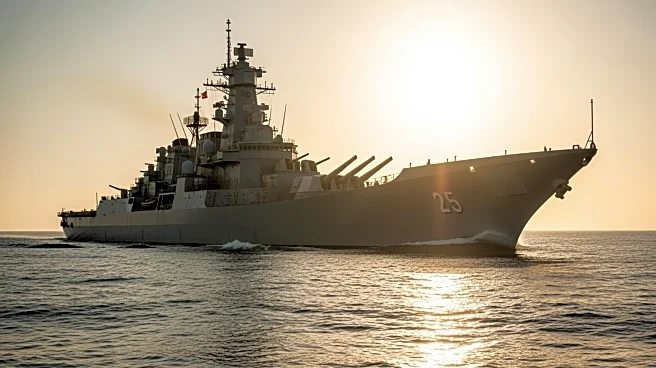
President Trump has unveiled plans for a new class of battleships, termed the 'Trump class,' as part of an initiative to expand the U.S. Navy's capabilities. These battleships are designed to be larger, faster, and significantly more powerful than previous
models, featuring advanced technology such as artificial intelligence and directed energy lasers. The first ship, the USS Defiant, will be the initial vessel in a fleet expected to grow to 20-25 ships. This announcement is part of a broader strategy to reinforce U.S. naval dominance and address concerns over production delays and cost overruns in defense contracting. The initiative also includes a focus on increasing the number of other war vessels, including a new class of frigates.
Why It's Important?
The introduction of the Trump-class battleships represents a significant shift in U.S. military strategy, emphasizing naval power as a cornerstone of national defense. This move is likely to impact defense contractors, who are under increased scrutiny to improve efficiency and reduce costs. The expansion of the naval fleet is seen as a countermeasure to the growing military capabilities of global rivals, particularly China. By enhancing naval strength, the U.S. aims to maintain its strategic advantage in international waters, which is crucial for global trade and security. The initiative also signals potential changes in defense industry practices, with possible implications for executive compensation and corporate governance.
What's Next?
President Trump plans to meet with major defense firms to address production issues and explore measures to limit executive pay and shareholder payouts in cases of project delays. This could lead to significant changes in how defense contracts are managed and executed. The development of the Trump-class battleships will likely involve extensive collaboration between the government and private sector, with potential impacts on employment and technological innovation within the defense industry. The broader naval expansion strategy may also influence U.S. foreign policy and military engagements worldwide.