
What's Happening?
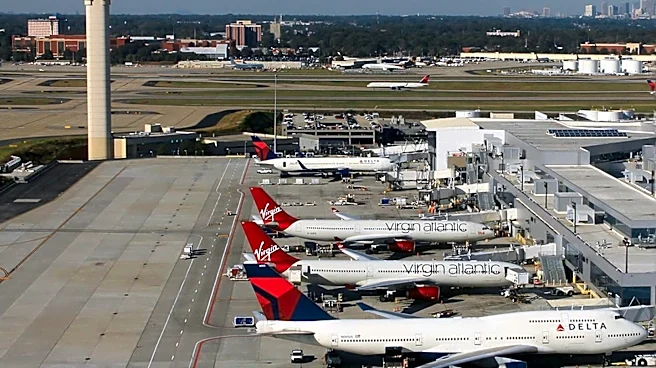
Hartsfield-Jackson Atlanta International Airport (ATL) has been ranked as the busiest airline hub in the United States for 2025, primarily due to the extensive operations of Delta Air Lines. According
to data from aviation analytics firm Cirium, Delta's dominance at ATL is a significant factor in its top ranking. The hub-and-spoke model used by major airlines like Delta, American, and United filters millions of passengers through key airports. Other major hubs include Dallas Fort Worth International Airport (DFW) and Charlotte Douglas International Airport (CLT) for American Airlines, and Chicago O'Hare International Airport (ORD) for United Airlines. Notably, some of the busiest airports by passenger volume, such as New York's JFK and Los Angeles' LAX, do not appear on the list due to the lack of a single dominant airline.
Why It's Important?
The ranking of airline hubs is crucial for understanding the dynamics of air travel in the U.S. It highlights the strategic importance of certain airports in the national and international travel network. For airlines, having a major hub can significantly enhance operational efficiency and passenger connectivity. For passengers, these hubs often mean more flight options and potentially lower fares due to competition. The dominance of certain airlines at these hubs can also influence regional economies, as they bring in significant business and tourism traffic. Additionally, the data reflects broader trends in airline strategies, such as the use of larger aircraft and the focus on transcontinental and international routes.
What's Next?
Airlines are likely to continue optimizing their hub operations to maximize efficiency and profitability. This could involve increasing the number of flights, upgrading facilities, or introducing new routes. Airports may also invest in infrastructure improvements to handle increased traffic and enhance passenger experience. The competition among airlines at these hubs could lead to more competitive pricing and service offerings. Additionally, regulatory changes or shifts in travel demand could impact future rankings and operations at these hubs.