



What's Happening?
Seismologists William Frazer and Jeffrey Park have identified a mysterious geological structure beneath Bermuda that may explain the island's unusual geological features. Bermuda, an archipelago of 181 islands, is situated on a swollen mass of Earth's
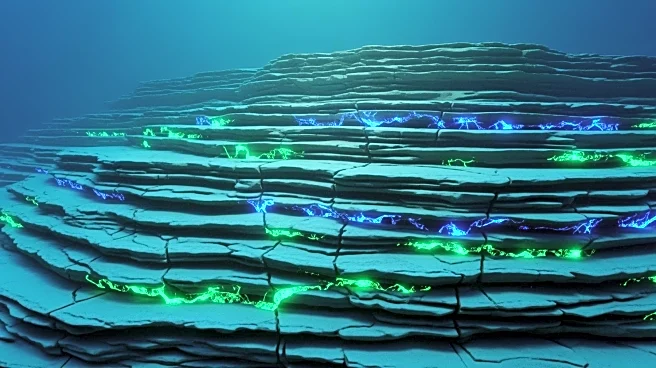
crust, which traditionally should not exist without a mantle plume. Typically, volcanic island chains like Hawaii have a series of volcanoes supported by a deep-rooted mantle plume. However, Bermuda lacks such a plume, raising questions about its geological formation. The researchers found evidence of a 20-kilometer-thick layer of low-density rock beneath the oceanic crust, which may be uplifting the crust and maintaining the island's elevation. This discovery challenges previous geological theories and suggests that this 'underplating' could be preventing Bermuda from sinking into the Atlantic Ocean.
Why It's Important?
The discovery of this geological structure beneath Bermuda is significant as it challenges existing theories about volcanic island formation. Understanding the geological processes that keep Bermuda above sea level could have broader implications for studying other volcanic islands and their stability. This research may also contribute to the knowledge of tectonic activity and the dynamics of Earth's crust, which are crucial for predicting geological events such as earthquakes and volcanic eruptions. Additionally, the findings could influence future geological and environmental studies, particularly in regions with similar geological anomalies.
What's Next?
Further research is likely needed to confirm the findings and explore the implications of this geological structure. Scientists may conduct additional seismic studies to better understand the composition and behavior of the low-density rock layer beneath Bermuda. This could lead to new insights into the geological history of the region and potentially revise existing models of island formation. The research may also prompt investigations into other regions with unexplained geological features, potentially leading to new discoveries about Earth's crust and mantle dynamics.