






What's Happening?
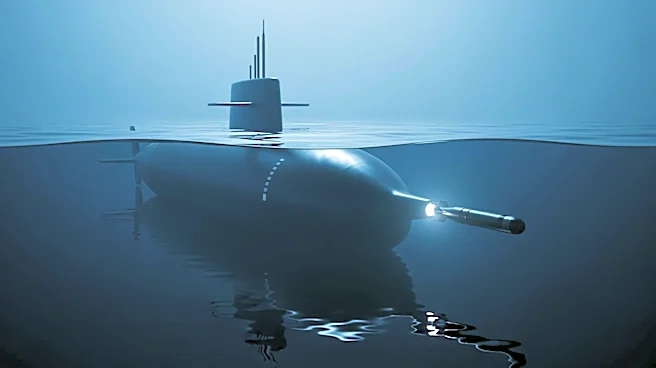
Taiwan has successfully conducted the first torpedo firing test of its domestically-developed submarine, marking a significant milestone in its efforts to modernize its military capabilities. This development is part of Taiwan's broader strategy to strengthen
its defense systems amid increasing military exercises by China, which claims Taiwan as its territory. The submarine program, which has received technological and expertise support from the United States and Britain, aims to deploy two submarines by 2027. The first submarine, costing approximately $1.57 billion, is equipped with a Lockheed Martin Corp combat system and U.S. Mark 48 torpedoes. The recent test was conducted to verify the operational capabilities of the submarine's combat system, including detection, tracking, and firing control.
Why It's Important?
The successful torpedo test represents a critical step for Taiwan in bolstering its defense against potential threats from China, which has been conducting frequent military exercises in the region. This development is particularly significant given Taiwan's diplomatic isolation and the ongoing tensions with China over territorial claims. The enhancement of Taiwan's military capabilities through the indigenous submarine program could alter the strategic balance in the region, providing Taiwan with a more robust deterrent against aggression. The involvement of the United States and Britain in the program underscores the international dimension of Taiwan's defense strategy and highlights the geopolitical stakes involved.
What's Next?
Taiwan plans to continue developing its submarine fleet, with the goal of deploying two domestically-built submarines by 2027. The ongoing support from international partners like the United States and Britain is expected to play a crucial role in the program's success. As Taiwan advances its military capabilities, it may face increased diplomatic and military pressure from China. The international community, particularly countries with vested interests in the region, will likely monitor these developments closely, potentially influencing future diplomatic and military engagements in the Asia-Pacific region.