





What's Happening?
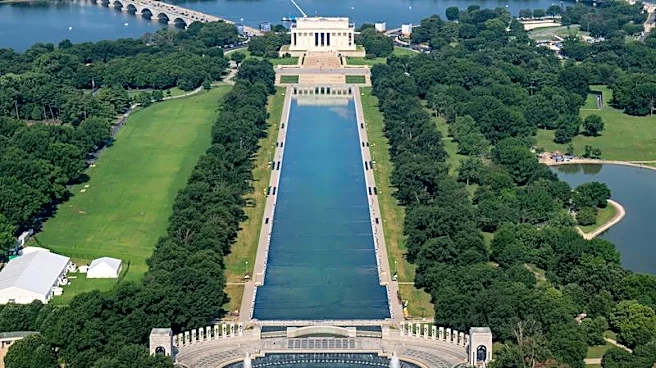
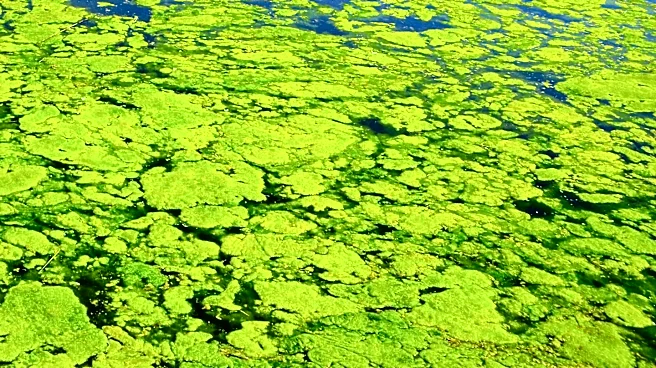
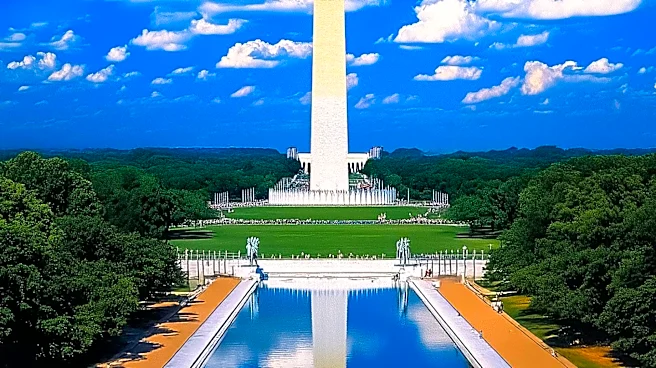
Ahead of the 250th anniversary of the Declaration of Independence, an innovative ozone nanobubble system was deployed to clean the Lincoln Memorial Reflecting Pool in Washington, DC. Despite a major cleanup effort, the pool had developed an algae bloom,
turning the water bright green. To address this, a $1.7 million system injected microscopic ozone nanobubbles into the pool, effectively oxidizing and removing the algae. Nanobubbles, which are extremely small gas bubbles, can remain in water longer than ordinary bubbles and act as a strong oxidizing agent. This technology, while effective in the controlled environment of the reflecting pool, raises questions about its potential application in larger, natural bodies of water that suffer from eutrophication and oxygen depletion.
Why It's Important?
The use of nanobubble technology in the Lincoln Memorial Reflecting Pool highlights a potential solution for larger environmental issues, such as the restoration of oxygen-depleted lakes and seas. Eutrophication, often caused by nutrient overloads from fertilizers and sewage, leads to algal blooms that deplete oxygen and create 'dead zones' where aquatic life cannot survive. By delivering oxygen directly to the sediment surface, nanobubbles could help reduce nutrient release and methane generation, potentially reversing the degradation of these ecosystems. This technology could be significant for environmental restoration efforts, offering a targeted approach to oxygenate critical areas without the extensive infrastructure required by other methods.
What's Next?
The success of nanobubble technology in the Lincoln Memorial Reflecting Pool suggests potential applications in larger bodies of water, such as the Baltic Sea, which suffers from significant oxygen depletion. Future projects may explore the use of interfacial oxygen nanobubbles, which attach to solid particles and deliver oxygen directly to the sediment. This method could reduce energy requirements and minimize ecosystem disturbance. However, challenges remain, including the need for continuous operation and the high energy demands of current systems. Further research and development are needed to assess the feasibility and cost-effectiveness of scaling this technology for broader environmental restoration.
Beyond the Headlines
The deployment of nanobubble technology in aquatic restoration could have broader implications for environmental engineering and policy. As climate change and human activities continue to impact water bodies, innovative solutions like nanobubbles may become essential tools in mitigating ecological damage. The ethical considerations of intervening in natural ecosystems, the potential for unintended consequences, and the economic costs of such technologies will need to be carefully evaluated. Additionally, public awareness and support for environmental restoration initiatives could drive further investment and innovation in this field.