





What's Happening?
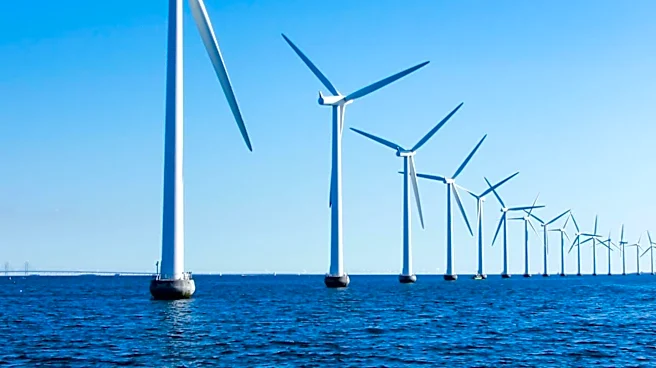
Ørsted has commenced commercial operations at its 704 MW Revolution Wind offshore wind farm, located off the coast of New England in the U.S. This significant milestone follows the full installation of all wind turbines for the project. The Revolution Wind farm has achieved
commercial operations under its offtake contracts with utility companies in Connecticut and Rhode Island as of October. This project is part of Ørsted's broader strategy to execute an 8.1 GW construction program on schedule and within budget, demonstrating the company's capability in managing large-scale renewable energy developments. Ørsted, headquartered in Denmark, is a global leader in offshore wind development, construction, and operation, with over 35 years of experience in the sector. The company's recent financial reports indicate strong performance, with a 19% growth in EBITDA, excluding new partnerships and cancellation fees, compared to the first nine months of the previous year.
Why It's Important?
The activation of the Revolution Wind farm marks a crucial step forward for the U.S. renewable energy landscape, particularly in the Northeast. This project will provide a substantial amount of clean energy to Connecticut and Rhode Island, contributing significantly to the states' decarbonization goals and reducing reliance on fossil fuels. For the U.S. energy sector, it demonstrates the viability and scalability of offshore wind as a major power source, potentially encouraging further investment and development in this nascent industry. The successful completion and operation of such a large-scale project by Ørsted, a global leader, also signals confidence in the U.S. market for international investors and developers. This development is expected to create jobs, stimulate local economies through supply chain development, and enhance energy security by diversifying the national energy mix. It also sets a precedent for future offshore wind projects, showcasing effective project execution and regulatory navigation.
What's Next?
With the Revolution Wind farm now commercially operational, the focus will shift to its long-term performance and integration into the regional power grid. The project will begin delivering electricity to homes and businesses in Connecticut and Rhode Island, fulfilling its power purchase agreements. This success may pave the way for Ørsted and other developers to advance additional offshore wind projects in the U.S., as the industry gains momentum and operational experience. Future developments could include further expansion of existing wind farms or the initiation of new projects along the East Coast. Regulators and policymakers will likely monitor the economic and environmental impacts of Revolution Wind to inform future energy policies and permitting processes for offshore wind. The successful operation could also spur further investment in grid infrastructure upgrades necessary to accommodate increased renewable energy capacity.
Beyond the Headlines
The commercial operation of Revolution Wind extends beyond mere power generation; it represents a significant advancement in the U.S.'s energy transition and its commitment to combating climate change. This project contributes to the broader goal of establishing a robust domestic offshore wind supply chain, fostering innovation, and developing a skilled workforce in green energy sectors. The successful execution by Ørsted, a company that has transformed from a fossil fuel-based entity to a sustainable energy leader, offers a powerful case study for other industries seeking to decarbonize. Furthermore, the project's integration into the New England grid highlights the ongoing challenges and opportunities in modernizing energy infrastructure to support intermittent renewable sources. It also underscores the importance of state-level commitments and long-term contracts in de-risking large-scale renewable energy investments, setting a model for future public-private partnerships in the clean energy transition.