



What's Happening?
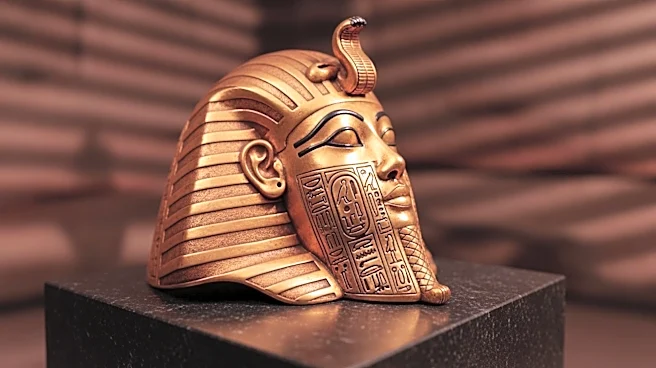
Egyptian authorities have unveiled a rare plaster blocking wall from King Tutankhamun's tomb, along with two restored New Kingdom tombs in Luxor. The wall, displayed for the first time at the Luxor Museum, is a unique artifact that has never been replicated,
as most Pharaonic tombs were looted. It bears seals belonging to Tutankhamun and necropolis guards, reflecting funerary rituals and administrative authority. The tombs of Rabuya and his son Samut, dating back to the 18th Dynasty, were also opened. These tombs contain scenes of daily life and funerary rituals, offering insights into ancient Egyptian culture.
Why It's Important?
The unveiling of these artifacts is significant for both historical and cultural reasons. The plaster wall is the only surviving piece of Tutankhamun's tomb that the world has never seen before, making it a one-of-a-kind artifact. This discovery enhances our understanding of ancient Egyptian burial practices and the administrative processes involved in securing royal tombs. The restoration of the tombs of Rabuya and Samut provides further insights into the New Kingdom period, particularly the roles and lives of those who served the deity Amun. These developments are likely to boost tourism in Egypt, as they offer new attractions for visitors interested in ancient history.
What's Next?
The exhibition of these artifacts is expected to attract significant international attention, potentially increasing tourism to Luxor and Egypt as a whole. The Egyptian Ministry of Tourism and Antiquities may continue to explore and restore other historical sites, further enriching the country's cultural heritage. Additionally, the artifacts could be used in educational programs to promote understanding of ancient Egyptian history and culture. The global archaeological community may also engage in further research and collaboration to uncover more about the New Kingdom period.