



What's Happening?
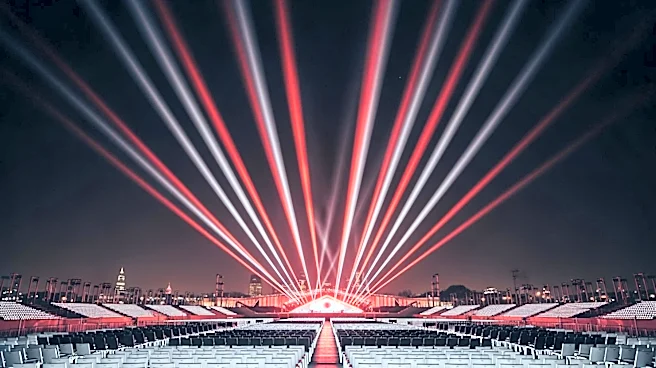
President Trump has proposed replacing a planned summer concert series on the National Mall with a large-scale MAGA rally, inviting 'Only Great Patriots.' The concert series, organized by Freedom 250, was intended to celebrate the 250th anniversary of
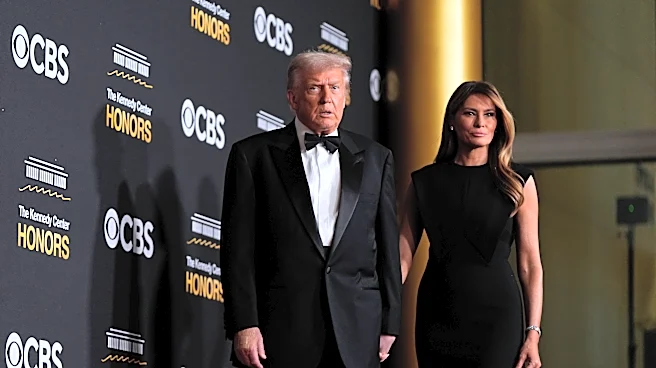
the United States with performances from various artists. However, several musicians have withdrawn, citing the event's politically charged nature. Trump's proposal comes amid challenges faced by the concert series, including artist dropouts and public criticism. The president's move reflects his approach to intertwining art and politics, positioning himself as a central figure in the celebration. Trump's influence extends to cultural institutions, as seen in his actions at the Kennedy Center, where he replaced board members and attempted to reshape the institution's focus.
Why It's Important?
President Trump's proposal to replace a nonpartisan concert series with a MAGA rally underscores his strategy of using cultural events to promote his political agenda. This approach highlights the intersection of art and politics, where cultural expressions are leveraged to bolster ideological narratives. Trump's actions at the Kennedy Center and other institutions reflect a broader trend of politicizing cultural spaces, potentially alienating artists and audiences who seek nonpartisan engagement. The shift from a concert series to a political rally may impact public perception of national celebrations, influencing how cultural events are organized and perceived. This development raises questions about the role of art in political discourse and the implications for cultural institutions under Trump's influence.
What's Next?
The proposed MAGA rally on the National Mall may face logistical and public relations challenges, as stakeholders navigate the shift from a concert series to a political event. Artists and cultural organizations may respond by advocating for nonpartisan spaces and events, emphasizing the importance of art as a unifying force. The broader cultural landscape may see increased polarization, with events and institutions aligning with specific political ideologies. As the 250th anniversary approaches, discussions about the role of art in national celebrations and its impact on public discourse are likely to continue. Stakeholders, including political leaders and cultural organizations, will need to address these dynamics and consider the implications for future events.