







What's Happening?
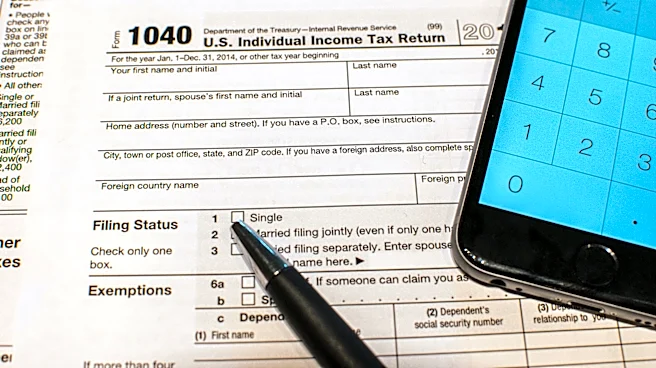
The Internal Revenue Service (IRS) has confirmed that the deadlines for claiming the 2020 and 2021 Recovery Rebate Credits (Line 30 on Form 1040) have officially passed. For the 2020 tax year, the deadline was May 17, 2024, and for the 2021 tax year, it was April
15, 2025. These credits were designed to reconcile Economic Impact Payments (EIPs) that individuals might have missed or received in incomplete amounts. The IRS emphasizes that Line 30 on older Form 1040s is not a new 2026 stimulus payment. The agency also warns the public to be skeptical of any websites or messages promising a '2026 stimulus payment,' as these are likely scams aimed at extracting money or personal details. Taxpayers are advised to check IRS.gov directly, log into their IRS Online Account, and look for official IRS notices rather than relying on links in unexpected emails or texts.
Why It's Important?
This announcement is crucial for U.S. taxpayers as it clarifies the finality of past stimulus payment claims and protects them from potential fraud. The passing of these deadlines means that individuals who did not claim their eligible Recovery Rebate Credits for 2020 and 2021 within the specified windows can no longer do so. This impacts those who might have been unaware of their eligibility or the deadlines, potentially leaving money unclaimed. More significantly, the IRS's warning about '2026 stimulus' scams highlights an ongoing threat to financial security. Scammers often exploit public interest in government benefits to trick individuals into revealing sensitive information or sending money. By explicitly stating that no new universal stimulus payments are authorized for 2026, the IRS aims to reduce the effectiveness of these fraudulent schemes, safeguarding taxpayers from financial loss and identity theft.
What's Next?
Taxpayers should remain vigilant against fraudulent claims of new stimulus payments. The IRS advises checking official sources like IRS.gov for any information regarding tax credits or payments. For those who believe they have an error on a prior return related to Line 30, the IRS calculates and corrects incorrect non-zero amounts for 2021 and sends a notice if changes are made. However, for blank or zero Line 30 entries where no credit was claimed, the period for filing an amended return (Form 1040-X) has expired. Individuals with questions about their tax records should consult their IRS Online Account or order tax transcripts. The IRS will continue to process general refunds within standard timeframes, but these do not apply to expired Recovery Rebate Credit claims.
Beyond the Headlines
The recurring nature of stimulus-related scams underscores a broader challenge in public communication and financial literacy. Despite clear guidance from official sources, the allure of unexpected financial relief makes individuals vulnerable to misinformation and fraud. This situation highlights the need for continuous public education campaigns by government agencies to combat evolving scam tactics. Furthermore, the strict deadlines for claiming tax credits, while necessary for administrative efficiency, can disproportionately affect vulnerable populations who may lack access to information or resources to navigate complex tax procedures. The emphasis on official IRS channels also reinforces the importance of digital security and critical thinking when encountering financial offers online, serving as a reminder that legitimate government communications rarely originate from unsolicited emails or texts.