







What's Happening?
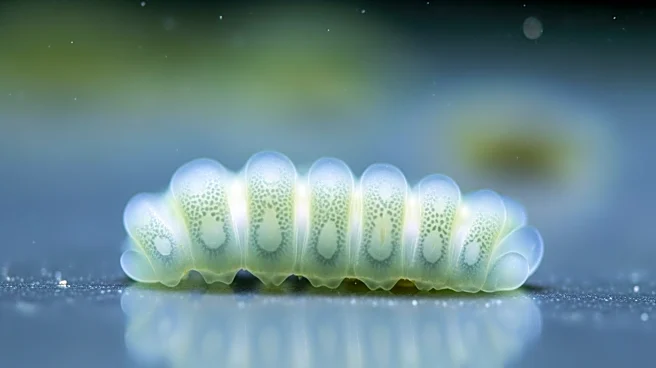
Researchers at the Indian Institute of Science have discovered a unique survival mechanism in tardigrades, also known as water bears, that allows them to withstand extreme heat. The study focused on a species called Paramacrobiotus sp. BLR strain, which
can survive in a 'tun' state—a condition where the tardigrades lose most of their body water and their metabolism halts. This state enables them to endure high temperatures, with 90% surviving at temperatures up to 85°C for an hour. The research, published in the Journal of the Royal Society Interface, highlights that the reduced thermal conductivity in the tun state protects the tardigrades' cellular structures from heat damage.
Why It's Important?
The findings of this study are significant as they provide insights into extremotolerance, the ability to survive in extreme environmental conditions. Understanding the physical and biochemical processes that allow tardigrades to endure such conditions could inspire the development of new materials and technologies. These innovations could be crucial for applications in space exploration, desert operations, and other environments where extreme temperatures are a challenge. The study also opens avenues for further research into the molecular mechanisms behind this thermal resistance, potentially leading to breakthroughs in bioengineering and materials science.
What's Next?
Future research will aim to identify the molecular mechanisms that enable tardigrades to adjust their thermal conductance. This could involve exploring other extremotolerant species to validate the findings and expand the understanding of survival strategies in extreme conditions. The insights gained could lead to the creation of advanced materials capable of withstanding harsh environments, benefiting industries such as aerospace, defense, and environmental management.
Beyond the Headlines
The study of tardigrades not only advances scientific knowledge but also poses ethical and philosophical questions about the limits of life and survival. As researchers delve deeper into extremotolerance, they may uncover principles that challenge current biological paradigms. Additionally, the potential applications of this research in creating resilient materials raise considerations about the environmental impact and sustainability of such technologies.