
What's Happening?
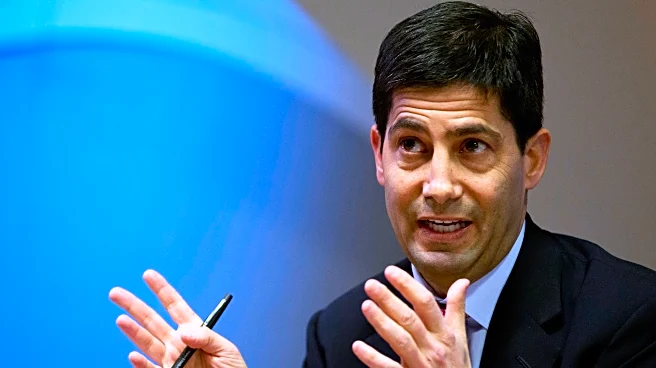
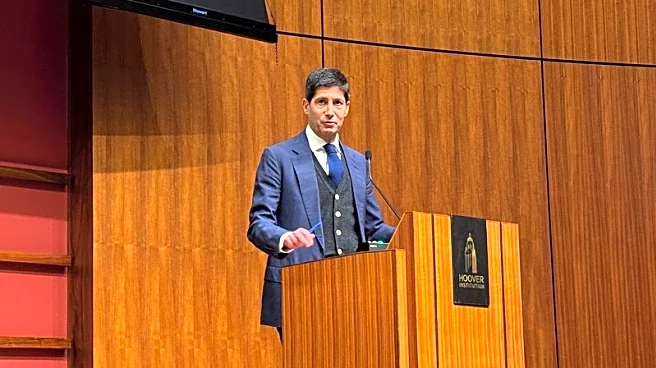
President Donald Trump has nominated Kevin Warsh to serve as the next Chairman of the Federal Reserve, succeeding Jerome Powell. Warsh, who previously served as a Federal Reserve governor from 2006 to 2011,
is recognized for his role during the 2008 financial crisis. His nomination has garnered support from several Republican lawmakers and financial industry leaders, who praise his experience and judgment. Warsh is known for advocating lower interest rates and a reduced Federal Reserve balance sheet, focusing on inflation and employment. His nomination has already influenced market expectations, with analysts predicting potential rate cuts in 2026.
Why It's Important?
The nomination of Kevin Warsh is significant as it signals a potential shift in Federal Reserve policies that align more closely with President Trump's economic preferences, particularly regarding interest rates. Warsh's stance on reducing the Fed's balance sheet and his criticism of the central bank's expansion into areas like climate and inequality suggest a more traditional focus on monetary policy. This could impact U.S. economic strategies, especially in managing inflation and employment. The financial markets are closely watching Warsh's potential influence on future rate cuts, which could affect investment strategies and economic growth.
What's Next?
Warsh's confirmation process will proceed in a Republican-controlled Senate, where he has already received pledges of support from several members. If confirmed, Warsh could preside over the Federal Reserve's June meeting, where his policies might be tested. The financial markets are anticipating at least one or two rate cuts in 2026, which Warsh could implement during his initial period in office. His leadership will be scrutinized for balancing the administration's push for looser monetary policy with the Fed's mandate of stable prices and maximum employment.
Beyond the Headlines
Warsh's nomination could lead to internal debates within the Federal Reserve regarding its scope and priorities. His history of critiquing the Fed's involvement in non-monetary issues like climate change and inequality may prompt discussions on the institution's role in broader economic and social policies. Additionally, Warsh's emphasis on reducing the balance sheet and controlling inflation could influence the Fed's approach to economic stimulus and monetary expansion.