






What's Happening?
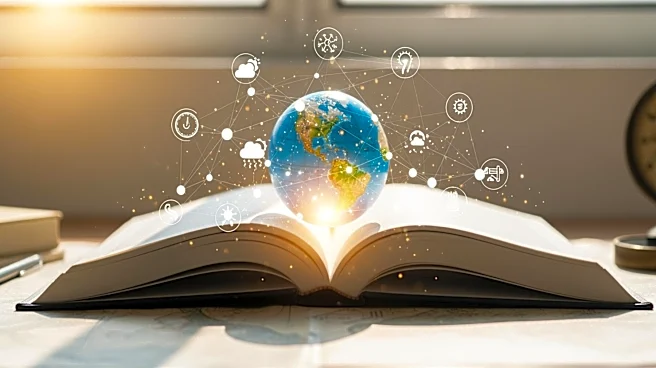
A letter to the editor in Education Week emphasizes the importance of geography education in today's world. The letter argues that geography is not just about memorizing locations but understanding spatial relationships that affect global issues such
as migration, climate risk, and political conflict. The author, a teacher from Shepherdsville, Kentucky, highlights how geography helps students evaluate claims, interpret data, and follow current events. The ability to think spatially is presented as essential for informed citizenship, especially in a world influenced by globalization and misinformation.
Why It's Important?
Geography education equips students with critical thinking skills necessary to navigate complex global issues. Understanding spatial relationships allows students to make sense of interconnected phenomena, such as economic inequality and global supply chains. This knowledge is crucial in an era where misinformation is prevalent, and the ability to critically assess information is vital. By fostering spatial thinking, geography education contributes to developing informed citizens who can engage with global challenges effectively.