






What's Happening?
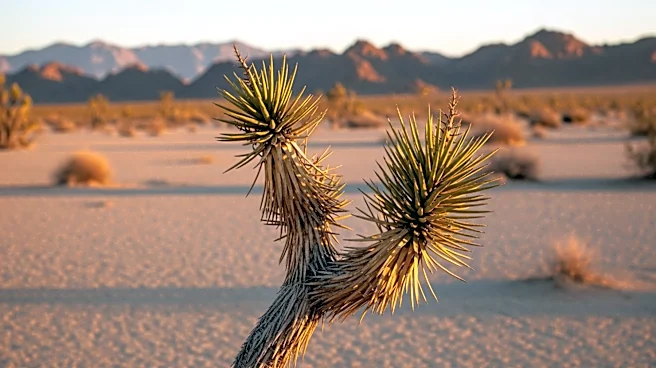
In the Mojave National Preserve, scientists are investigating the decline of Joshua trees, a key species in the desert ecosystem. A National Park Service effort to replant Joshua trees, which were cut down by a Southern California Edison contractor, has
seen limited success, with only 14% of the 193 seedlings surviving. Researchers, led by Anne Polyakov from the Society for the Protection of Underground Networks, are exploring the role of mycorrhizal fungi in supporting the trees' survival. These fungi form symbiotic relationships with plant roots, potentially aiding in nutrient and water absorption. The decline of Joshua trees is attributed to human development, wildfires, and climate change, which threaten their habitat. The research aims to improve restoration efforts by understanding the underground fungal networks that could support the trees' growth.
Why It's Important?
The decline of Joshua trees has significant ecological implications, as they are a linchpin of the Mojave Desert ecosystem, providing food and shelter for various animals. The loss of these trees could disrupt the desert's biodiversity and ecological balance. Additionally, the trees hold cultural significance, inspiring artists and serving as symbols of the desert's unique character. Understanding the role of mycorrhizal fungi in tree survival could enhance conservation strategies, offering a potential solution to mitigate the impacts of climate change and human activity on these iconic plants. Successful restoration efforts could preserve the ecological and cultural heritage of the Mojave Desert.
What's Next?
Researchers plan to analyze soil samples to identify the presence of mycorrhizal fungi and their potential role in supporting Joshua tree seedlings. The findings could inform future restoration projects, potentially involving the inoculation of seedlings with native fungi to improve survival rates. The National Park Service is open to exploring soil mycorrhizal treatments to enhance restoration success. The research is part of a broader effort to map fungal networks globally, with the Mojave Desert identified as a region rich in fungal diversity. These efforts could guide conservation priorities and strategies to protect Joshua trees from climate threats.