


What's Happening?
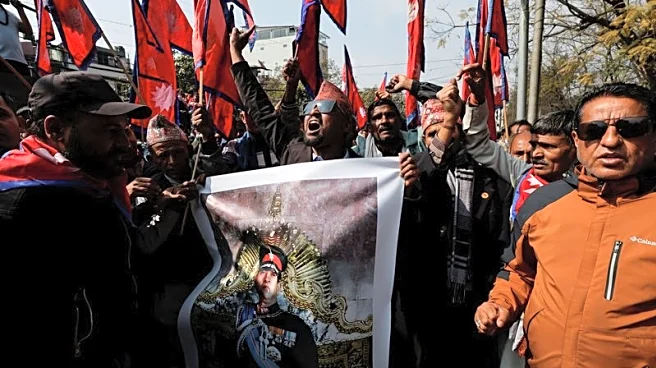
The ongoing protests in Iran have sparked hopes in Israel for a potential regime change that could alter Tehran's stance towards Jerusalem. Israeli Prime Minister Benjamin Netanyahu has expressed support for the Iranian demonstrators, anticipating the fall
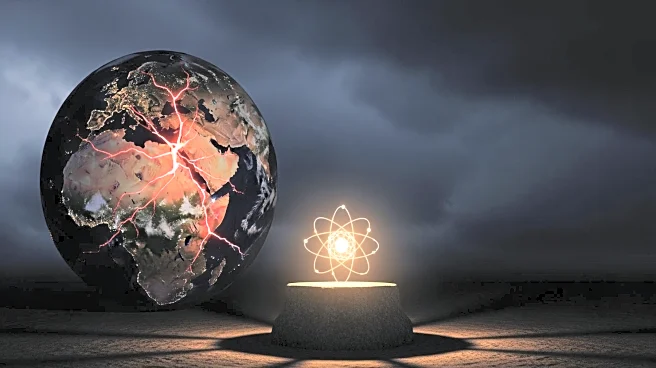
of Supreme Leader Ali Khamenei's regime. However, there is concern that a regime change might not necessarily benefit Israel. The current regime, despite its threats, provides certain strategic advantages to Israel, such as blocking problematic nuclear deal restorations and enabling the formation of anti-Iran coalitions. The potential rise of more extreme factions, such as the Islamic Revolutionary Guard Corps (IRGC), could lead to a more aggressive nuclear posture and direct confrontations with Israel. Additionally, the possibility of moderate factions gaining power and negotiating new international agreements could lead to sanctions relief and economic revitalization for Iran, potentially isolating Israel diplomatically.
Why It's Important?
The potential regime change in Iran holds significant implications for regional stability and Israel's security. A shift in power could lead to more aggressive policies towards Israel, especially if extremist factions gain control. This could exacerbate the nuclear threat, as Iran's existing missile inventories and nuclear infrastructure could be leveraged more aggressively. Furthermore, the international community's response to a new Iranian regime could impact global diplomatic dynamics, potentially leaving Israel isolated if new agreements lead to sanctions relief for Iran. The situation underscores the complexity of Middle Eastern geopolitics, where regime changes do not guarantee favorable outcomes for all stakeholders.
What's Next?
If the Iranian regime collapses, the international community will closely monitor the power dynamics within Iran. The rise of extremist factions could prompt Israel and its allies to reassess their security strategies. Diplomatic efforts may intensify to prevent the proliferation of nuclear capabilities and to maintain regional stability. The U.S. and other global powers might need to navigate the delicate balance of engaging with a new Iranian government while ensuring that Israel's security concerns are addressed. The situation remains fluid, with potential for both diplomatic breakthroughs and heightened tensions.
Beyond the Headlines
The potential regime change in Iran highlights the broader geopolitical challenges in the Middle East. The historical context of Iran's nuclear ambitions, dating back to the Shah's era, suggests that even a regime favorably disposed towards Israel might retain strategic military capabilities. The diverse nature of the current protests, involving various ethnic and political groups, adds complexity to the potential outcomes. The situation also raises ethical questions about the international community's role in influencing regime changes and the long-term implications for regional peace and security.