




What's Happening?
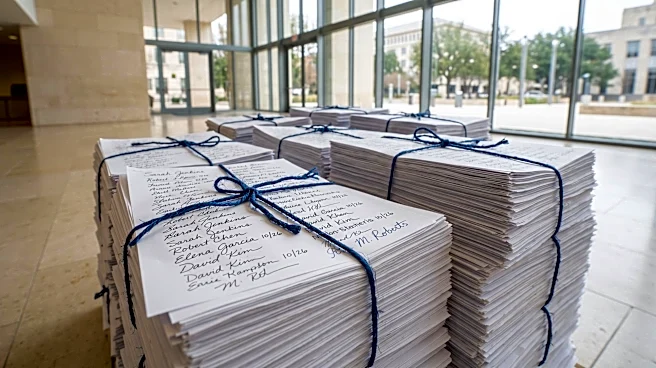
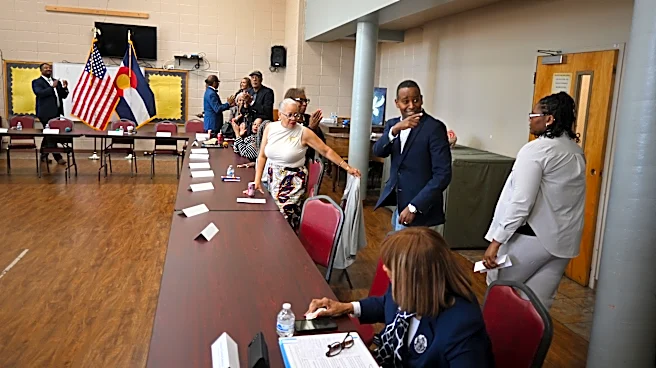
Olathe Families United, a community group, has delivered 7,881 signatures to the Kansas State Board of Education. These signatures represent opposition to a plan that proposes the closure of six schools within USD 233. The delivery took place on November
13. Organizers of the initiative stated that the total number of signatures significantly surpassed their campaign goal, which was set at '6,100 Voices,' by nearly 1,800 signatures. This action underscores strong community sentiment against the proposed school closures in the Olathe district. The group's efforts aim to influence the decision-making process of the state board regarding the future of these educational facilities and the students they serve. The large number of signatures indicates widespread concern among residents about the potential impact of these closures on their community and children's education.
Why It's Important?
The delivery of 7,881 signatures by Olathe Families United to the Kansas State Board of Education is a significant demonstration of community engagement and opposition to proposed school closures. This action highlights the power of grassroots movements in influencing local and state educational policy. For the Kansas State Board of Education, this large volume of signatures represents substantial public sentiment that cannot be easily dismissed, potentially leading to a re-evaluation of the proposed closures in USD 233. The decision to close schools often has profound impacts on communities, affecting property values, neighborhood cohesion, and access to educational resources for students. Parents and residents stand to lose local schools, which often serve as community hubs, while the school district might be seeking closures for reasons such as budget constraints or declining enrollment. This public outcry could force the board to consider alternative solutions or engage in more extensive public dialogue before making a final decision, thereby impacting the educational landscape and community structure in Olathe.
What's Next?
Following the submission of 7,881 signatures, the Kansas State Board of Education is expected to review the petition and consider the community's strong opposition to the proposed school closures in USD 233. The board may initiate further discussions, public hearings, or re-evaluate the data supporting the closure plan. Olathe Families United will likely continue its advocacy efforts, monitoring the board's response and potentially organizing further community actions. The USD 233 school district, which proposed the closures, may also be prompted to engage in more extensive dialogue with community members to address their concerns or present alternative solutions. The ultimate decision on whether to proceed with the school closures will rest with the Kansas State Board of Education, which will need to weigh the district's rationale against the significant public sentiment expressed through the petition. This process could lead to a modification or even a reversal of the original closure plan.
Beyond the Headlines
The organized opposition to school closures in Olathe reflects a broader national trend where communities actively resist decisions that impact local educational infrastructure. Beyond the immediate issue of specific school buildings, this movement highlights the deep emotional and social ties communities have to their local schools, which often serve as anchors for neighborhood identity and social cohesion. The debate also touches upon the complex balance between fiscal responsibility in school districts and the preservation of community assets. Ethically, school boards face the challenge of making difficult financial decisions while upholding their commitment to providing accessible and quality education, often leading to tensions between data-driven efficiency and community well-being. Legally, such large-scale public opposition can sometimes lead to legal challenges or increased scrutiny of the decision-making process, ensuring transparency and adherence to due process. Culturally, the fight to keep schools open often symbolizes a community's struggle to maintain its character and resist external pressures for change, underscoring the multifaceted role schools play beyond just academic instruction.