
What's Happening?
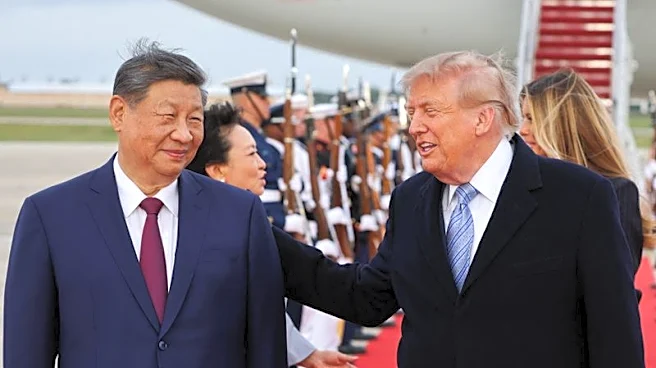
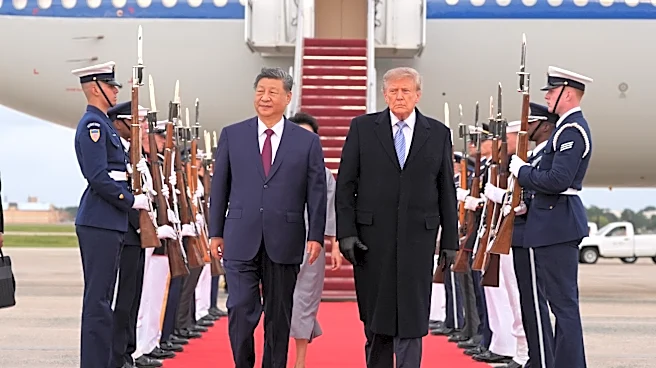
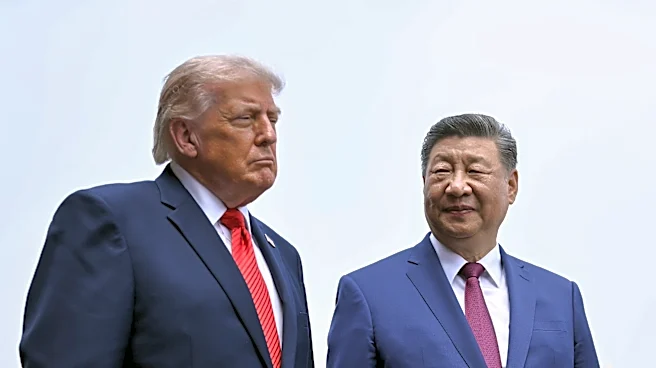
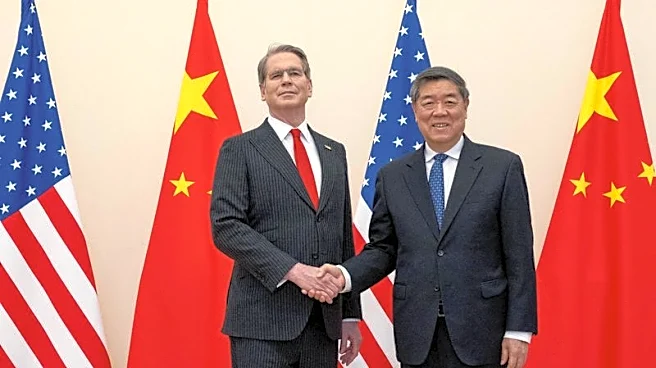
President Trump and President Xi are scheduled to meet, with updated expectations following recent developments in U.S.-China relations. Treasury Secretary Bessent and Vice Premier He Lifeng held preparatory
talks in New York, resulting in an agreement to extend the Busan trade truce through January 10, 2027. This extension aims to reduce uncertainty and provide a framework for continued negotiations on trade, export controls, and technology policy. The two sides also formalized an ongoing U.S.-China AI dialogue, with discussions covering preliminary mechanisms for communicating about significant AI-related incidents. While progress has been made on the Board of Trade, with U.S. Trade Representative (USTR) Jamieson Greer declaring it 'operational' for certain goods, the Board of Investment remains stalled due to disagreements on structure. Additionally, Foreign Minister Wang Yi and Secretary Rubio discussed restarting military-to-military arms-control talks, suspended since 2024, concerning U.S. weapons sales to Taiwan.
Why It's Important?
The extension of the trade truce is important as it prevents an immediate escalation of trade tensions between the U.S. and China, offering a window for further negotiations and stability in global markets. This provides businesses with a degree of predictability, allowing them to plan for supply chains and investments without the immediate threat of new tariffs. The formalization of an AI dialogue is crucial given the increasing competition and technological divergence between the two nations, aiming to reduce misunderstandings and manage potential incidents. The stalled Board of Investment, however, highlights persistent structural disagreements that could limit deeper economic integration. The discussions on Taiwan arms sales underscore the enduring geopolitical sensitivities that continue to shape the broader U.S.-China relationship, impacting regional stability and defense industries.
What's Next?
The extended trade truce through January 10, 2027, sets the stage for continued high-level engagement, with potential additional meetings between President Trump and President Xi at the APEC summit in Shenzhen and the G20 Leaders’ Summit in Doral, Florida. Negotiations will likely focus on resolving outstanding issues related to export controls, rare earth materials, and the renewal of the BIS Affiliates Rule. The U.S.-China AI dialogue is expected to continue, with officials meeting again in approximately two months, likely at the APEC summit, to further develop mechanisms for incident communication. President Trump is also expected to make a decision on the pending $14 billion arms deal to Taiwan 'in a fairly short time,' which will be closely watched by both Beijing and Taipei. The U.S. administration will also need to navigate the implications of the recently signed Lindsey O. Graham Sanctioning Russia and Iran Act, which could impact China as a major purchaser of Russian energy.
Beyond the Headlines
Beyond the immediate trade and technology discussions, the ongoing U.S.-China engagement reflects a complex strategy of 'managed competition.' While both sides seek to avoid outright conflict, they are simultaneously vying for technological and geopolitical dominance. The AI dialogue, for instance, occurs against a backdrop of U.S. accusations of Chinese theft of AI models, highlighting the deep-seated mistrust and intellectual property concerns. The discussions on Taiwan, a highly sensitive issue for Beijing, underscore the potential for miscalculation and the need for robust crisis communication mechanisms. The U.S.'s use of economic leverage, such as the potential application of the Lindsey O. Graham Act, demonstrates a willingness to employ broad tools to achieve foreign policy objectives. This dynamic interplay of cooperation and competition will continue to shape global economic and political landscapes, influencing international alliances and the future of technological innovation.