



What's Happening?
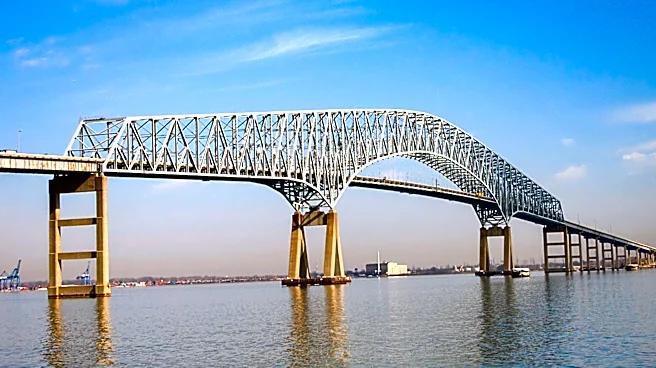
Girl Scouts from Turner Station, Maryland, recently visited the wreckage site of the Francis Scott Key Bridge as part of a summer program aimed at reconnecting them with the local waterways. The trip was organized in partnership with the Pleasant Yacht
Club, a historically Black marina. On March 26, 2024, the container ship Dali struck the 47-year-old truss bridge, causing its collapse, killing six workers, and disrupting a major transportation artery in the Baltimore region. The Girl Scouts, many of whom live near the bridge and could see it from their homes, observed the fragmented roadbed. The program, led by troop leader Arkia Wade and Captain Lafon Porter of the yacht club, included fishing and learning about boating safety, with the goal of exposing the children to maritime activities and potential careers. The visit served as a poignant reminder of the bridge's absence and its ongoing impact on local travel and daily life.
Why It's Important?
This initiative is significant for several reasons. Firstly, it provides a unique educational experience for young people, allowing them to witness firsthand the aftermath of a major infrastructure disaster and understand its tangible impact on their community. This direct engagement can foster a deeper appreciation for engineering, public safety, and the environment. Secondly, the partnership between the Girl Scouts and the Pleasant Yacht Club, a historically Black institution, promotes diversity and inclusion in maritime activities, exposing children to role models and career paths they might not otherwise consider. This is particularly important in communities where access to such opportunities may be limited. Lastly, the event underscores the ongoing recovery and rebuilding efforts following the bridge collapse, reminding the public of the long-term consequences of such incidents on local economies, transportation networks, and the daily lives of residents in the Baltimore area.
What's Next?
The visit by the Turner Station Girl Scouts marks a continuation of community engagement efforts following the Francis Scott Key Bridge collapse. While the immediate focus for the region remains on the ongoing investigation, debris removal, and the long-term rebuilding of the bridge, community programs like this will likely continue to play a vital role in helping residents process the event and adapt to the changes. The partnership between the Girl Scouts and the Pleasant Yacht Club could serve as a model for future educational and community-building initiatives, fostering a deeper connection between local youth and their environment. As the rebuilding process progresses, there will be continued discussions about infrastructure resilience, maritime safety, and the economic recovery of the Port of Baltimore. The experiences of these young scouts may also inspire future generations to pursue careers in fields related to engineering, environmental science, or maritime industries, contributing to the region's long-term recovery and development.
Beyond the Headlines
The visit to the Francis Scott Key Bridge wreckage by the Turner Station Girl Scouts carries deeper implications beyond the immediate educational experience. It highlights the profound psychological and social impact of major infrastructure failures on communities. For children who grew up with the bridge as a landmark, its sudden absence represents a significant disruption to their sense of place and normalcy. The program's emphasis on reconnecting with the water, a historical cornerstone of the Turner Station community, also speaks to the resilience and adaptability of local residents in the face of adversity. Furthermore, the involvement of the historically Black Pleasant Yacht Club underscores the importance of preserving and promoting cultural heritage and community institutions, especially in areas undergoing significant change. This event serves as a powerful reminder that recovery from such disasters is not just about physical reconstruction but also about healing communities, fostering new connections, and inspiring future generations to contribute to their collective well-being.