





What's Happening?
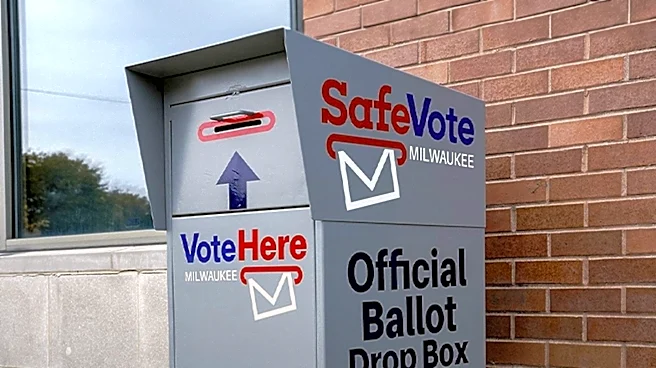
The US Postal Service (USPS) is proceeding with plans to publish a final rule that would impose new requirements on states regarding mail-in voting, despite two federal court injunctions currently blocking these changes. The rule, scheduled for publication
in the Federal Register next week, acknowledges the existing injunctions from federal courts in California and Massachusetts. These changes stem from a March executive order signed by President Trump, which aims to restrict mail-in voting. The order mandates that states provide the federal government with voter information and adopt new balloting procedures. If states fail to comply, the USPS would refuse to deliver ballots. The federal government has also sued 30 states and Washington D.C. for not providing lists of eligible voters. The USPS is prepared to implement these new restrictions immediately if the court injunctions are lifted, stating that this would give election officials maximum time to comply before the next election.
Why It's Important?
This development is significant as it highlights an ongoing effort to reshape the landscape of U.S. elections, particularly concerning mail-in voting. Mail-in voting has become a critical component of the electoral process, with nearly one in three Americans utilizing it in 2024. The proposed restrictions could disenfranchise a substantial number of voters by making it more difficult for states to facilitate mail-in ballots. The requirement for states to share voter lists with the Department of Homeland Security and other agencies raises concerns about voter privacy and federal overreach into state-managed election processes. The potential refusal of the USPS to deliver ballots to non-compliant states could create logistical chaos and undermine public confidence in the integrity of the election system. This move also underscores a broader political struggle over voting access, with implications for future election outcomes and the balance of power between federal and state governments.
What's Next?
The immediate future hinges on the resolution of the federal court injunctions. If these injunctions are lifted, the USPS intends to swiftly implement the new restrictions, requiring states to provide voter data to a Federal Ballot Mail Portal and adhere to new preparation standards for Federal Ballot Mail envelopes. This would necessitate rapid adjustments by state election officials, potentially impacting the timeline for mail-in and absentee ballot distribution, which typically begins in September. The activation of the Portal and its associated verification process would follow the publication of the system of records governing the Portal. States that have been sued for refusing to hand over voter lists will likely continue to challenge these federal mandates, potentially leading to further legal battles. The ongoing legal and political disputes surrounding these voting changes are expected to intensify as the November midterm congressional elections approach.
Beyond the Headlines
The push for these mail-in voting restrictions extends beyond immediate election logistics, touching upon fundamental questions of democratic access and federalism. The executive order and subsequent USPS rule reflect a broader strategy to control voter access, particularly in an era where mail-in voting has become increasingly prevalent. The debate over voter eligibility lists and the role of federal agencies in state elections raises constitutional questions about states' rights to manage their own electoral processes. Furthermore, the move could exacerbate partisan divisions, as mail-in voting has often been a point of contention between political parties. The long-term implications could include a shift in voting patterns, a decrease in overall voter participation if access is curtailed, and a redefinition of the federal government's role in overseeing elections. This situation also highlights the vulnerability of essential public services, like the USPS, to political directives and their potential impact on democratic functions.