


What's Happening?
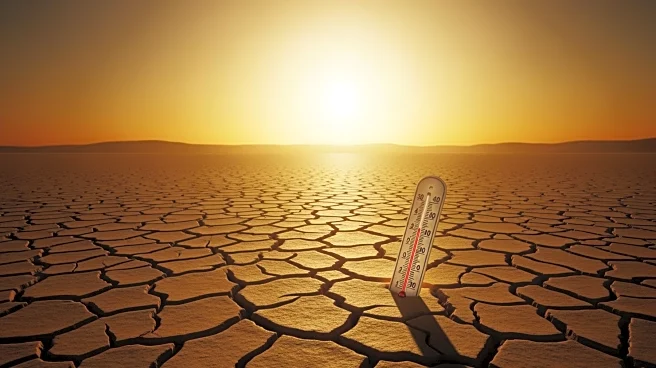
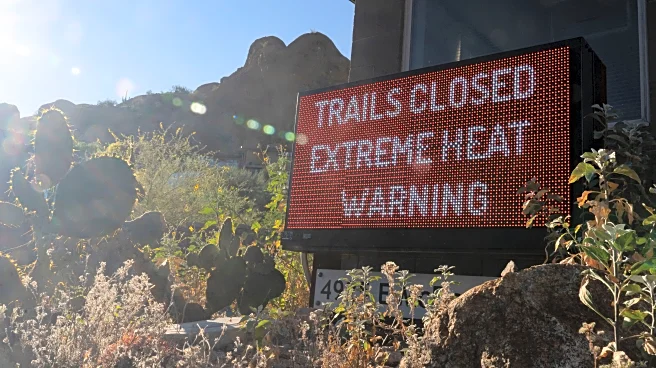
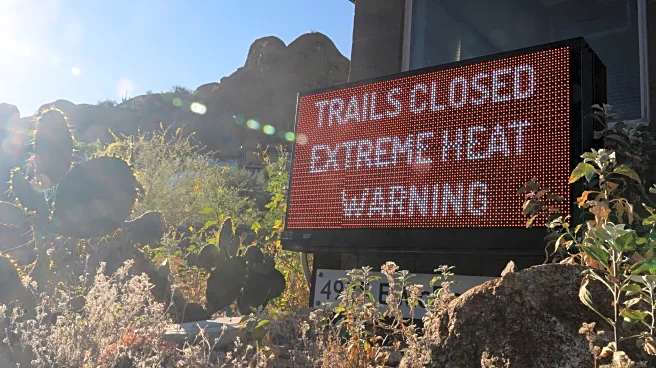
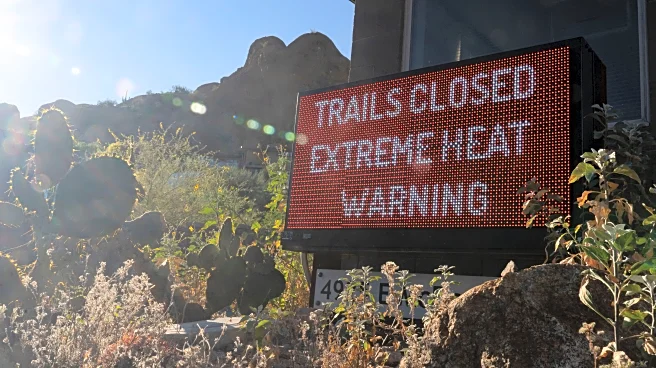
A historic heat wave is currently affecting the Western United States, with temperatures reaching unprecedented levels for March. The National Weather Service has issued extreme heat warnings and advisories across multiple states, including California
and Arizona. This heat wave is characterized by a ridge of high pressure, or 'heat dome,' that is causing temperatures to soar well above seasonal norms. Cities like Phoenix and Tucson are experiencing multiple days of triple-digit temperatures, a rarity for this time of year. The heat wave is expected to persist into next week, potentially setting new all-time March records in over 100 cities across 10 states.
Why It's Important?
The ongoing heat wave is significant due to its potential to break long-standing temperature records, highlighting the increasing frequency and intensity of extreme weather events. This situation poses a risk to public health, particularly for vulnerable populations, and could strain energy resources as demand for cooling increases. Additionally, the heat wave exacerbates existing drought conditions in the Southwest, potentially leading to water shortages and increased wildfire risk. The event underscores the broader impacts of climate change, as such extreme weather patterns become more common and severe.
What's Next?
As the heat wave continues, authorities are likely to maintain or expand heat advisories and warnings. Residents are advised to take precautions to stay cool and hydrated. The persistence of high temperatures could lead to further stress on infrastructure, including power grids and water supplies. In the longer term, this event may prompt discussions on climate resilience and adaptation strategies, as well as the need for policies to mitigate the impacts of climate change.