




What's Happening?
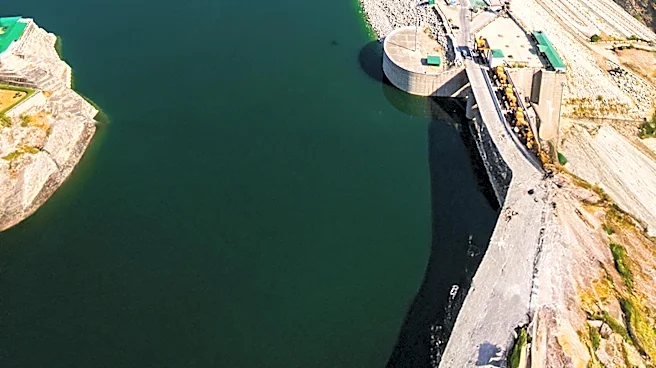
Construction work on the Tarbela Dam's Tunnel Five (T-5) hydropower project has been indefinitely suspended following a rock collapse that caused a protective embankment to breach. This breach led to a large volume of water flooding the tunnel and powerhouse
area. The incident occurred during the excavation of the 2nd Bench Connecting Tunnel, where a weak rock mass collapsed, allowing water from the Intake Pit to enter the work sites. All workers, both Pakistani and foreign, were safely evacuated, and no casualties have been reported, though one Pakistani worker was rescued after being swept into the water. Authorities have issued an alert for areas adjoining the River Indus, as the breach has increased water flow, with an expected inflow of 150,000 cusecs in the next 24 hours. An investigation has been launched to determine the cause of the breach, examining potential structural weaknesses or technical faults. The Water and Power Development Authority (Wapda) clarified that reports of the main tunnel collapsing are incorrect, stating that only the work sites were affected.
Why It's Important?
The indefinite suspension of the Tarbela 5th Extension Hydropower Project carries significant implications for Pakistan's energy infrastructure and economic development. This project, designed to add 1,530 megawatts to the dam's installed generation capacity, is crucial for meeting the nation's growing energy demands. Delays in such large-scale infrastructure projects can lead to increased costs, prolonged reliance on alternative energy sources, and potential energy shortages. The project, with an approved cost of $807 million and funding from the World Bank and Asian Infrastructure Investment Bank, has already faced repeated delays, pushing its completion deadline to September 2027. Further setbacks could strain international financial partnerships and impact Pakistan's ability to achieve its energy goals. The incident also highlights the inherent risks in large-scale construction, particularly in challenging geological environments, and underscores the importance of stringent safety protocols and structural integrity assessments.
What's Next?
Following the incident, construction and development work on the T-5 project has been suspended indefinitely. A high-level inquiry has been initiated to investigate the circumstances surrounding the protective embankment's failure, aiming to determine if a structural weakness or technical fault was responsible. The next course of action for the project will be decided once the investigation report is received. In the interim, authorities have drained water from the Intake Pit and commenced dewatering the under-construction powerhouse. Public advisories have been issued for residents near the River Indus, urging precautionary measures due to increased water flow and advising against approaching the riverbanks for bathing, swimming, or boating. The incident may lead to further revisions of the project's timeline and budget, potentially impacting its scheduled completion in September 2027.
Beyond the Headlines
The rock collapse at the Tarbela Dam project underscores broader challenges in managing large-scale infrastructure developments in regions prone to natural hazards. Beyond the immediate financial and energy implications, such incidents can erode public trust in engineering and construction standards. The involvement of international financial institutions like the World Bank and Asian Infrastructure Investment Bank also brings international scrutiny to project management and safety. This event could prompt a re-evaluation of risk assessment methodologies and emergency response protocols for similar projects globally. Furthermore, the repeated delays faced by the project, even before this incident, suggest systemic issues in planning, regulatory approvals, or execution, which could have long-term consequences for Pakistan's ability to attract and manage foreign investment in critical infrastructure.