









What's Happening?
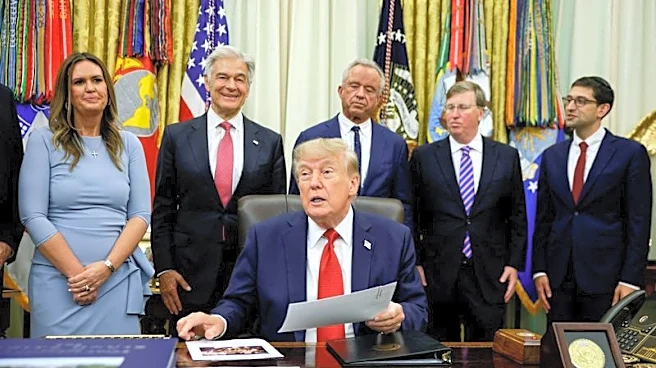
The U.S. Commerce Department is actively working to enhance data integrity and break down data silos across federal agencies, a directive stemming from an executive order signed by President Trump in March 2025. According to Joyce Meyer, Undersecretary
of Commerce for Economic Affairs, this initiative aims to create a more robust database of administrative records from various agencies, including the Internal Revenue Service, Veterans Affairs Department, Health and Human Services Department, and Social Security Administration. The goal is to reduce reliance on new data collection and lessen the burden on taxpayers by utilizing existing federal data. As part of these efforts, the Census Bureau and the Bureau of Economic Analysis have agreed to increase data sharing, including 'census microdata,' to improve Gross Domestic Product estimates. Additionally, the Census Bureau is collaborating with the U.S. Postal Service for the 2030 Census to boost data integrity and accuracy, leveraging the public's trust in postal workers to encourage census participation. Meyer also indicated that the department plans to address subpar data collection practices, such as differential privacy, which led to inaccuracies in the 2020 Census data.
Why It's Important?
This push for data integration and improved integrity has significant implications for government efficiency and public policy. By breaking down data silos, the Commerce Department seeks to streamline operations, reduce redundant data collection, and potentially save taxpayer money. More accurate and comprehensive data can lead to better-informed policy decisions across various sectors, from economic forecasting to social program development. The collaboration between the Census Bureau and the U.S. Postal Service could enhance the accuracy of future census counts, which are crucial for the apportionment of House of Representatives seats and the distribution of federal funding. However, the Commerce Department's recent proposal to exclude undocumented immigrants and certain legal residents from House apportionment counts has drawn criticism from advocacy groups, who view it as an attempt to manipulate voting maps. This highlights the political sensitivity surrounding data collection and its potential impact on representation and resource allocation.
What's Next?
The Commerce Department's proposed rule regarding census counts is currently undergoing a comment process, allowing the public and advocacy groups to share their perspectives. The outcome of this process will determine the final shape of how the census counts people for apportionment purposes. The department will continue its efforts to integrate data from various federal agencies, aiming to create a more unified and accessible data infrastructure. Further collaborations, similar to the one with the U.S. Postal Service, are likely to be explored to improve data collection methodologies. The ongoing legal and public debate surrounding the proposed changes to census counting, particularly concerning immigrant populations, suggests that this issue will remain a focal point. The department's commitment to addressing data collection issues like differential privacy indicates a continuous effort to refine and improve statistical practices.
Beyond the Headlines
The Commerce Department's initiatives touch upon fundamental questions of data governance, privacy, and the role of government in collecting and utilizing information. The debate over who counts in the census for apportionment purposes raises profound ethical and legal questions about citizenship, representation, and the definition of a 'resident.' The move to integrate data across agencies, while potentially increasing efficiency, also brings to the forefront concerns about data security, privacy, and the potential for misuse of consolidated personal information. The criticism from advocacy groups regarding the census proposal underscores the deep political and social divisions surrounding immigration and its impact on American democracy. This situation highlights how seemingly technical changes in data collection can have far-reaching consequences for civil rights, political power, and the demographic landscape of the nation. The emphasis on 'gold standard' science and data integrity also reflects a broader societal discussion about trust in institutions and the scientific process.