






What's Happening?
China's passenger car exports increased by 73% year-on-year in May, reaching approximately 809,000 vehicles. This surge is attributed to rising gasoline and diesel prices, which have heightened interest in electric vehicles (EVs). The China Association
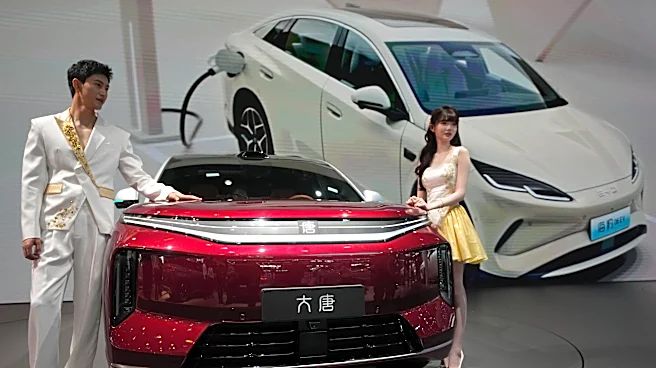
of Automobile Manufacturers reported that exports of new energy vehicles, including pure EVs and plug-in hybrids, more than doubled to about 435,000 passenger cars, accounting for over half of the total exports. Chinese automakers, such as BYD, are expanding their overseas presence, targeting markets in Latin America, Asia, and Europe. This expansion comes amid declining domestic demand, partly due to reduced government incentives for EV adoption. Domestic passenger car sales fell by 23.4% in May compared to the previous year, marking the seventh consecutive month of decline.
Why It's Important?
The increase in China's car exports, particularly in the EV sector, highlights the global shift towards sustainable transportation solutions. As fuel prices rise, consumers are increasingly turning to EVs, which offer a more cost-effective and environmentally friendly alternative. This trend is significant for the U.S. automotive industry, which may face increased competition from Chinese manufacturers in the EV market. The expansion of Chinese automakers into international markets could lead to more competitive pricing and innovation, potentially influencing U.S. automakers to accelerate their own EV development and adoption strategies. Additionally, the growth in EV exports underscores the importance of global collaboration in addressing climate change and reducing carbon emissions.
What's Next?
Chinese automakers are expected to continue their aggressive expansion into international markets, with forecasts indicating a 40% increase in annual passenger car exports by 2026. The focus on EVs is likely to intensify, with exports potentially rising by 80%. This expansion may prompt U.S. automakers to enhance their EV offerings and explore new markets to maintain competitiveness. Furthermore, as the global demand for EVs grows, there may be increased pressure on governments to implement supportive policies and infrastructure to facilitate the transition to electric transportation.
Beyond the Headlines
The rise in China's car exports, particularly in the EV sector, may have broader implications for global trade dynamics and environmental policies. As Chinese automakers gain a stronger foothold in international markets, there could be shifts in trade balances and economic relationships between countries. Additionally, the emphasis on EVs aligns with global efforts to combat climate change, potentially influencing policy decisions and encouraging further investment in renewable energy and sustainable technologies.