





What's Happening?
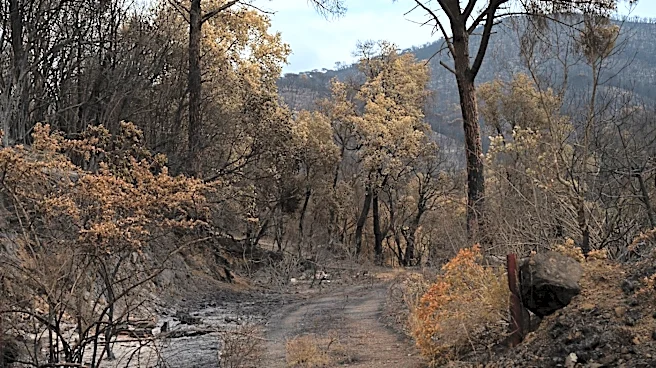
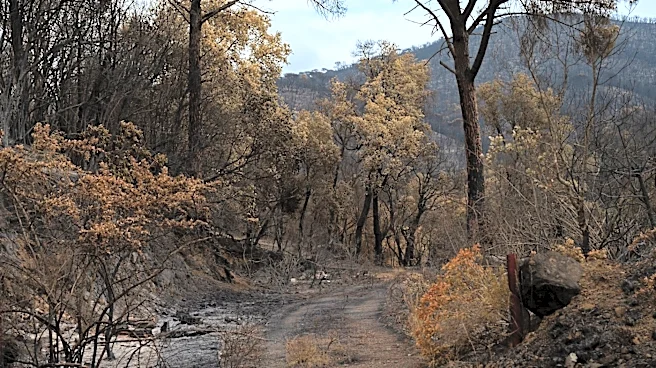
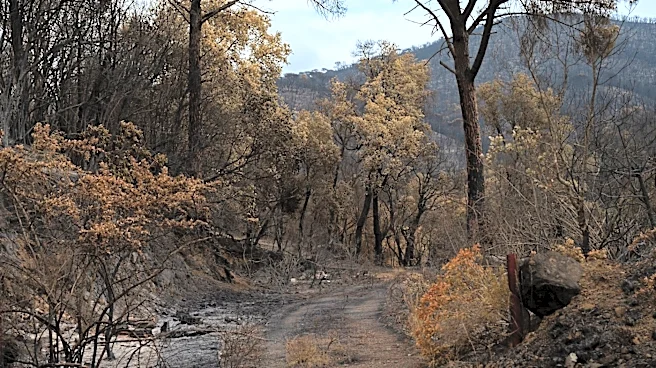
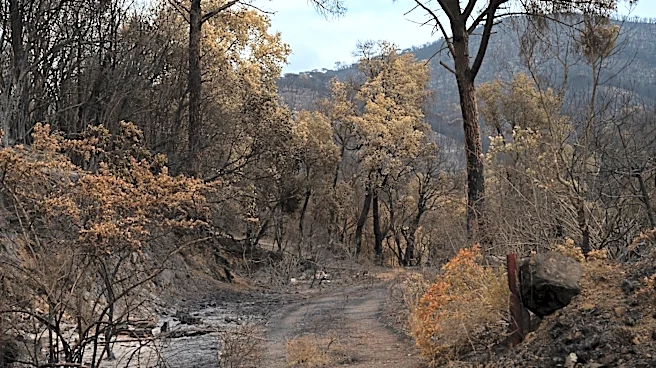
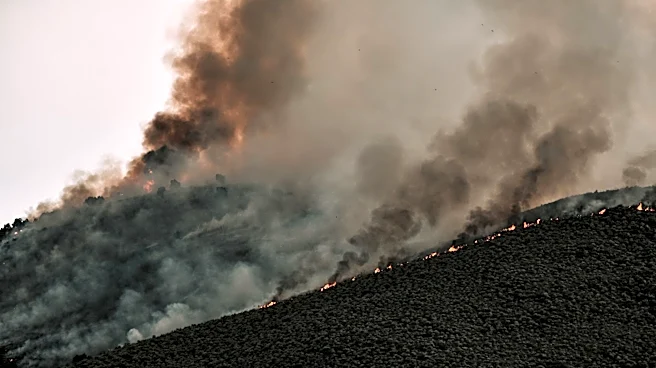
A wildfire, named the Plaskett fire, in California's Big Sur region has doubled in size overnight, leading to evacuations of nearby residents. As of Friday, the fire had consumed over 5,900 acres (2,400 hectares) in Monterey County and remained uncontained,
according to Cal Fire. The cause of the fire, which ignited on Tuesday, is currently under investigation. Fire authorities are utilizing helicopters and air tankers for targeted water drops to suppress the flames. However, the challenging terrain of the remote area, characterized by steep slopes and limited road access, is impeding the efforts of ground crews to reach and contain the fire. This incident occurs as firefighters in the region have been battling another blaze, the Timber fire, for several weeks, which has burned over 24,000 acres and is only 21% contained.
Why It's Important?
The rapid expansion of the Plaskett fire and the ongoing Timber fire highlight the severe and persistent wildfire threat facing California, particularly in its scenic and ecologically sensitive regions like Big Sur. These fires not only pose immediate dangers to human life and property, necessitating evacuations, but also cause significant environmental damage, destroying natural habitats and contributing to air pollution. The closure of sections of Highway 1, a major coastal route, disrupts transportation and tourism, impacting local economies. The challenges faced by firefighters due to the remote and rugged terrain underscore the difficulties in managing and containing such large-scale natural disasters, which are becoming more frequent and intense due to climate change and prolonged drought conditions in the Western U.S. The continuous battle against multiple large fires strains firefighting resources and personnel.
What's Next?
Firefighting efforts will continue to focus on containing the Plaskett fire, with authorities deploying aerial and ground resources despite the difficult terrain. Residents in affected areas will remain under evacuation orders until the situation is deemed safe. Investigations into the cause of the Plaskett fire will proceed. The ongoing Timber fire also requires continued containment efforts, and its progression will be closely monitored. The state of California will likely continue to allocate significant resources to wildfire prevention, detection, and suppression, including potential investments in new technologies and strategies to combat these increasingly destructive events. Public awareness campaigns for fire safety and preparedness will also remain crucial for residents in high-risk areas. The long-term recovery for affected communities and ecosystems will involve extensive restoration efforts.
Beyond the Headlines
The escalating frequency and intensity of wildfires in California, exemplified by the Plaskett and Timber fires, point to a deeper crisis driven by climate change and land management practices. The Big Sur region, known for its unique biodiversity and natural beauty, is particularly vulnerable, with fires threatening iconic landscapes and delicate ecosystems. The repeated closures of Highway 1 not only affect travel but also symbolize the growing disruption of daily life and economic activity in fire-prone areas. This situation prompts a broader discussion about the effectiveness of current wildfire management strategies, the need for more resilient infrastructure, and the long-term implications of a changing climate on human settlements and natural environments. It also highlights the psychological toll on communities living under constant threat of fire and the increasing financial burden on state and federal resources for disaster response and recovery.