





What's Happening?
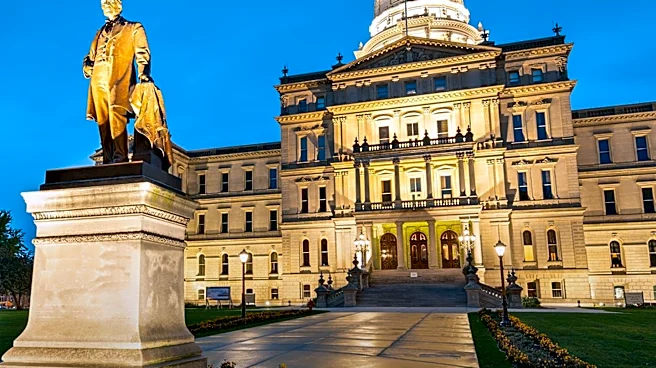
Michigan Governor Gretchen Whitmer has vetoed nine bills that were previously stalled in the legislative process. These bills, initially passed by the Democratic-led Senate in 2024, were not presented to Whitmer until a Michigan Supreme Court order mandated
their delivery. The bills addressed various issues, including Detroit area museums, corrections officer pensions, debt collection, and government contributions to employee health care. Whitmer cited the administrative burden and potential for litigation as reasons for her veto. The decision has sparked criticism from Michigan labor groups and fellow Democrats, who view the veto as a betrayal of democratic values and a setback for Michigan workers.
Why It's Important?
The veto of these bills by Governor Whitmer has significant implications for Michigan's political landscape and its labor movement. The bills were seen as beneficial to Michigan workers, particularly in terms of economic justice and public safety. Whitmer's decision has drawn condemnation from labor unions, including the Michigan AFL-CIO and UAW, who argue that the veto undermines the interests of working families. The controversy highlights the ongoing political tensions between the Democratic governor and the Republican-controlled House, as well as within the Democratic Party itself. The veto also raises questions about the legislative process and the role of the judiciary in resolving political disputes.
What's Next?
Following the veto, there is potential for continued political and legal battles in Michigan. Labor groups and Democratic lawmakers may seek to reintroduce the vetoed legislation or pursue alternative measures to address the issues at hand. The veto could also influence future legislative strategies and negotiations between the governor and the state legislature. Additionally, the decision may impact Whitmer's political standing and relationships with key stakeholders, including labor unions and Democratic allies. The situation underscores the importance of effective governance and collaboration in addressing the needs of Michigan residents.