






What's Happening?
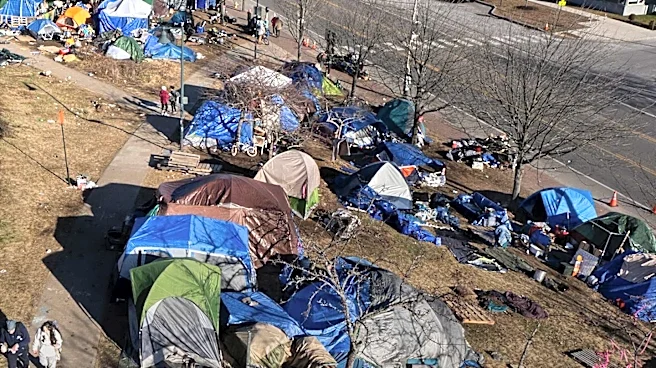
One year after its contentious passage, Wilmington City Council's anti-camping ordinance has seen limited enforcement, with no citations issued. The ordinance, re-introduced by Republican Councilman Luke Waddell in 2025, aimed to address a visible increase
in the downtown homeless population and concerns from business owners. While the ordinance was amended from a misdemeanor to an infraction and included promises for social workers and land for a new homeless shelter, its practical impact on reducing homelessness remains unclear. Wilmington Police Chief Ryan Zuidema noted that the ordinance has not been a 'game changer,' and officers primarily seek voluntary compliance rather than issuing citations. The city has hired three of four promised social workers to partner with police, and these individuals are currently being integrated into operations. However, progress on establishing a new homeless shelter has been slow, with the city still evaluating next steps after receiving several proposals.
Why It's Important?
The situation in Wilmington highlights the ongoing national debate surrounding homelessness and the effectiveness of punitive versus supportive approaches. The lack of citations under the anti-camping ordinance suggests a cautious implementation, possibly reflecting concerns about criminalizing homelessness. The slow progress on the promised shelter and the integration of social workers underscore the complexities and challenges local governments face in addressing this multifaceted issue. The city's efforts to balance public order with humanitarian concerns for unhoused individuals are indicative of a broader societal struggle. The outcome of Wilmington's strategy could influence how other U.S. cities approach similar challenges, particularly regarding the allocation of resources and the balance between enforcement and social services. The debate also touches upon the long-standing 'Ten-Year Plan to End Homelessness,' launched in 2008, which, after 18 years, still faces significant hurdles.
What's Next?
Wilmington City Council, now composed entirely of Democrats following recent elections, is expected to continue evaluating its approach to homelessness. The city is still recruiting for the fourth social worker position and is working to fully integrate the existing social workers with the police department. The process for establishing a new homeless shelter remains in the evaluation phase, with the city exploring options and potential community partners. Council members, including Salette Andrews and David Joyner, have expressed interest in a more comprehensive approach, potentially including a centralized resource hub for services and increased collaboration with New Hanover County. Funding for these initiatives is a significant concern, with discussions around state and federal grants, as well as potential contributions from The Endowment. The city's Homelessness Working Group has also identified creating a mental health-focused treatment and day center with supportive housing options as a key opportunity.
Beyond the Headlines
The Wilmington case reflects a national trend where cities grapple with homelessness, often leading to ordinances that are criticized for criminalizing poverty. The emphasis on a 'co-responder model' with social workers partnering with police represents a shift towards a more integrated, public health-oriented approach, moving beyond traditional law enforcement. However, the slow pace of shelter development and the ongoing debate about the ordinance's effectiveness highlight systemic challenges, including funding shortfalls and bureaucratic hurdles. The discussion also brings to light the 'Housing First' model, which prioritizes stable housing before addressing other issues like substance abuse or mental health. The broader implications include the ethical considerations of restricting public space for unhoused individuals without providing adequate alternatives, and the long-term societal costs of not effectively addressing homelessness, which can include increased strain on emergency services and healthcare systems.