
What's Happening?
The United States has lost its measles elimination status, a designation it held for 26 years, due to a resurgence of the virus across the country. The Pan American Health Organization, an arm of the World
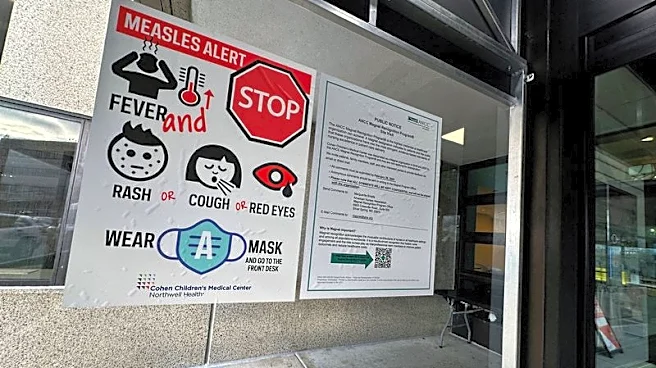
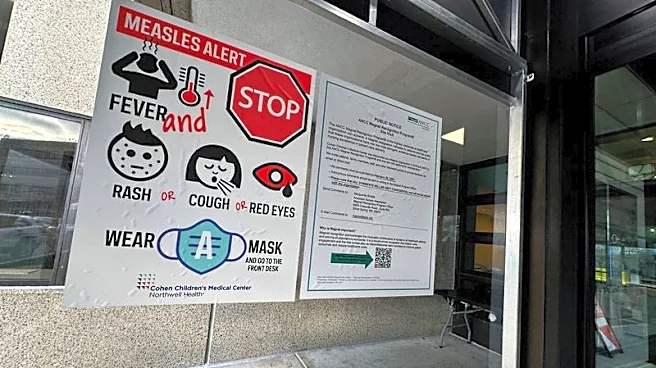
Health Organization, revoked the status following a significant increase in cases. This year, the U.S. has recorded over 5,400 measles cases, a substantial rise from 2,289 cases last year, according to the U.S. Centers for Disease Control and Prevention (CDC). In response, Connecticut public health officials are emphasizing the critical importance of measles vaccinations. Dr. Manisha Juthani, Connecticut Public Health Commissioner, stated that losing this status is a national setback and highlights the sustained spread of the virus. While Connecticut boasts one of the highest measles vaccination rates among kindergarteners at 98.6%, officials are advising residents to review their immunity status. Dr. Scott Roberts, an infectious diseases specialist at Yale School of Medicine, noted that the chance of measles exposure is now higher, even though Connecticut has only reported three cases this year, the most since 2019. He recommends that anyone unsure of their immunity or without written vaccination records get immunized.
Why It's Important?
The loss of measles elimination status signifies a significant public health regression for the United States, impacting national health security and potentially increasing healthcare burdens. Measles, once nearly eradicated in the U.S., is a highly contagious disease that can lead to severe complications, including hospitalization, encephalitis (brain swelling), and even death. The resurgence underscores vulnerabilities in public health infrastructure and vaccination coverage in certain areas, which could lead to broader outbreaks. For individuals, particularly children and those with compromised immune systems, the risk of exposure and infection has increased. The economic impact could include higher healthcare costs associated with treating measles cases, managing outbreaks, and implementing public health interventions. Furthermore, the re-establishment of measles transmission could strain healthcare systems and divert resources from other public health priorities. The situation also highlights the importance of maintaining high vaccination rates to achieve herd immunity, protecting those who cannot be vaccinated due to age or medical conditions. The call for increased vaccination by Connecticut officials aims to mitigate local risks and prevent wider community transmission, safeguarding public health.
What's Next?
Following the loss of measles elimination status, public health agencies nationwide are expected to intensify efforts to promote measles vaccination and monitor for outbreaks. States with lower vaccination rates may face increased pressure to improve coverage to prevent widespread transmission. Healthcare providers will likely see a rise in inquiries regarding measles immunity and vaccination, necessitating clear communication strategies about vaccine effectiveness and safety. The CDC will continue to track case numbers and provide guidance to state and local health departments. There may be renewed public health campaigns aimed at educating the public about the dangers of measles and the benefits of the MMR vaccine. For individuals, the immediate next step is to verify their vaccination status and consult with healthcare providers if they are not fully immunized or are unsure. Schools and childcare facilities may also reinforce vaccination requirements to protect their populations. The effectiveness of these renewed efforts will determine whether the U.S. can regain its elimination status and prevent further spread of the virus.
Beyond the Headlines
The re-emergence of measles in the U.S. carries deeper implications beyond immediate public health concerns, touching upon societal trust in science and public health institutions. The decline in vaccination rates in some communities, often fueled by misinformation, has directly contributed to this setback. This situation highlights a broader challenge in public health: combating vaccine hesitancy and ensuring that evidence-based health practices are widely adopted. Ethically, the resurgence raises questions about collective responsibility in public health, as individual vaccination choices impact community immunity and the protection of vulnerable populations. Legally, there could be renewed debates over vaccine mandates and exemptions, particularly in educational settings, as states grapple with balancing individual liberties and public health imperatives. Culturally, it reflects a growing polarization around scientific consensus, which could have long-term consequences for how the nation responds to future health crises. The loss of measles elimination status serves as a stark reminder of the fragility of public health achievements and the continuous effort required to maintain them against evolving societal and informational landscapes.