



What's Happening?
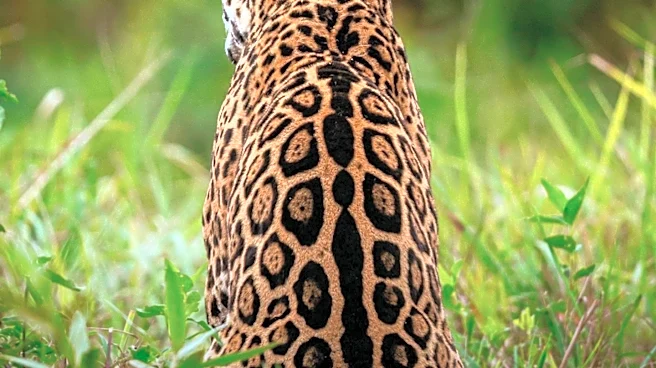
Recent camera trap photographs in Guatemala have captured a male jaguar, providing crucial evidence that jaguars are actively utilizing a wildlife corridor connecting Guatemala and Honduras. This Bi-National Corridor (BNC) stretches across the border
region and serves as a vital link between core jaguar populations in Mexico, Belize, and Guatemala, and those in central and eastern Honduras. Conservationists from Panthera, a wild cat conservation organization, emphasize that these images are a rare and significant occurrence, often happening only once a decade. The presence of jaguars in this corridor confirms the effectiveness of conservation efforts aimed at maintaining connectivity between populations, which is essential to prevent isolation, inbreeding, and increased vulnerability to extinction, especially in the face of human encroachment into their habitat.
Why It's Important?
The confirmation of jaguar movement through the Bi-National Corridor is critically important for the long-term survival of the species in Central America. Connected regions are vital for maintaining genetic diversity and ensuring the resilience of jaguar populations against environmental changes and human pressures. While jaguars are classified as 'Near Threatened' on the IUCN Red List globally, many of their 33 distinct populations, including those in Honduras and Guatemala, are categorized as 'Endangered' or 'Critically Endangered.' This corridor not only benefits jaguars but also supports a diverse ecosystem, serving as a water source for over 200,000 people and hosting numerous endemic and critically endangered species of mammals, birds, amphibians, reptiles, and plants. Protecting this corridor is therefore crucial for regional biodiversity and the natural resources that local communities depend on.
What's Next?
The recent camera trap snapshot is expected to lend urgency and support to Guatemala's National Jaguar Conservation Strategy. Conservation organizations and local governments will likely continue and potentially intensify their efforts to protect and expand the Bi-National Corridor. This may involve further land acquisition for conservation, community engagement programs to reduce human-wildlife conflict, and increased anti-poaching measures. The success of this corridor could also serve as a model for other regions facing similar challenges in wildlife conservation. Continued monitoring through camera traps and other methods will be essential to track jaguar populations and the overall health of the corridor. International collaboration between Guatemala and Honduras will also be key to ensuring the corridor's integrity and effectiveness.
Beyond the Headlines
The successful use of the Bi-National Corridor by jaguars highlights a broader shift in conservation strategies towards landscape-level approaches that prioritize connectivity over isolated protected areas. This approach recognizes that wildlife populations require large, interconnected habitats to thrive, especially in the face of climate change and habitat fragmentation. The involvement of local communities in these conservation efforts is also a critical, though often understated, aspect. Their cooperation is essential for the long-term viability of such corridors, as human activities directly impact the effectiveness of these pathways. The 'once-in-a-decade' nature of these sightings also underscores the immense challenges and dedication required for wildlife monitoring and conservation, often relying on infrequent but highly significant data points to guide extensive efforts.