



What's Happening?
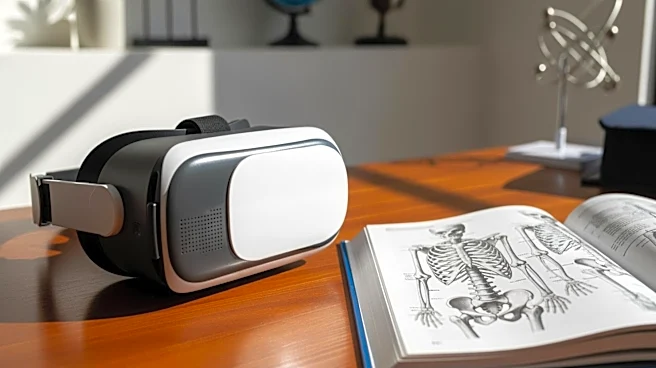
Central Michigan University (CMU) has initiated a virtual reality (VR) program for high school students, funded by a $500,000 grant from the U.S. Department of Agriculture. The program, which runs from 2025 to 2028, allows students to use Meta Quest 3
headsets to study anatomy and physiology in a more interactive manner. Bullock Creek High School is one of four schools participating in this initiative, where students can earn college credits through the course HSC 211: Anatomy and Physiology. The VR technology enables students to virtually explore and interact with human organs, providing a more immersive learning experience compared to traditional methods. CMU Associate Professor Roop Jayaraman supports the program by providing remote assistance to teachers and students. The initiative aims to spark interest in health professions among students and encourage them to pursue careers in their local communities.
Why It's Important?
This program represents a significant advancement in educational technology, offering high school students access to college-level resources and experiences. By integrating VR into the curriculum, students gain a deeper understanding of complex subjects like anatomy, which could lead to increased interest in STEM fields. The program also addresses the need for innovative educational tools that can enhance learning outcomes and engagement. Furthermore, by targeting rural schools, the initiative seeks to bridge educational gaps and provide equal opportunities for students in less accessible areas. The potential long-term impact includes a more skilled workforce in health professions, which is crucial for addressing healthcare needs in underserved communities.
What's Next?
As the program progresses, CMU plans to expand its reach to more high schools, potentially increasing the number of students who can benefit from this advanced educational tool. The success of the program could lead to further funding and support from educational and governmental bodies, encouraging similar initiatives across the country. Teachers and students will continue to adapt to the VR technology, with ongoing training and support to maximize its educational benefits. The program's outcomes could influence future educational policies and the integration of technology in classrooms nationwide.