



What's Happening?
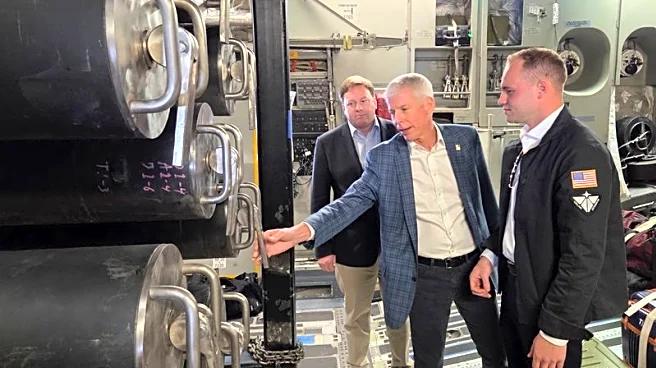
U.S. Energy Secretary Chris Wright has issued a warning to the International Energy Agency (IEA), threatening to withdraw the United States from the organization if it continues to prioritize the green energy transition. This stance aligns with President
Trump's administration, which has been advocating for increased fossil fuel use and rolling back environmental regulations since his return to office in January 2025. The IEA, established in 1974, is known for its forward-looking scenarios on renewable energy transitions. However, recent reports indicate a shift in the IEA's approach, now predicting continued growth in oil demand until mid-century, a change that seems to align with U.S. demands. Wright's comments come ahead of a ministerial meeting in Paris, where he is expected to further discuss the U.S. position.
Why It's Important?
The potential U.S. withdrawal from the IEA could significantly impact global energy policy and the international community's efforts to combat climate change. The IEA plays a crucial role in setting energy standards and promoting renewable energy. A U.S. exit could weaken these efforts and embolden other nations to deprioritize green energy initiatives. This move could also affect international relations, as the U.S. stance may lead to tensions with countries committed to the Paris Agreement and other climate goals. Domestically, this policy shift could influence U.S. energy markets, potentially boosting fossil fuel industries while stalling renewable energy investments.
What's Next?
The upcoming ministerial meeting in Paris will be a critical moment for the IEA and its member countries. The U.S. position may prompt discussions on the agency's future direction and its role in global energy policy. Other member countries may need to decide whether to accommodate U.S. demands or reinforce their commitment to the energy transition. The outcome of these discussions could shape the IEA's strategies and influence global energy trends. Additionally, the U.S. administration's actions may face domestic scrutiny from environmental groups and political opponents advocating for sustainable energy policies.