


What's Happening?
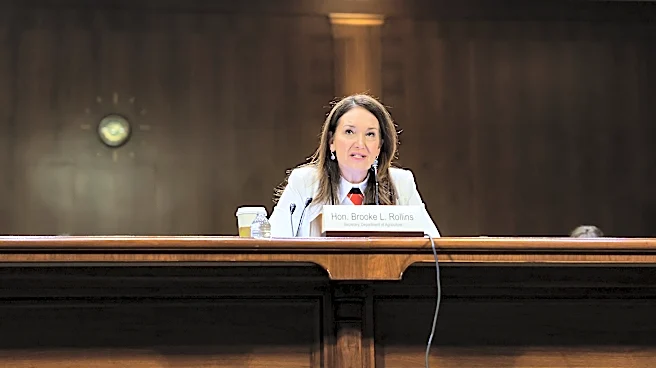
In 2025, Agriculture Secretary Brooke Rollins initiated a rollback of protections for national forest lands under the Roadless Rule. This action was followed by an announcement to allow roads, logging, and various forms of motorized recreation in official
inventoried roadless lands. The total area potentially affected by these changes is estimated to be as much as 58.5 million acres. This move is seen by some as a significant departure from the historical ethic of preserving wild places 'untrammeled' by human development, which has been a cornerstone of American wilderness policy since the Wilderness Act of 1964. Critics argue that without roadless areas, the concept of wilderness itself is undermined. This policy shift is part of a broader trend observed during the Trump administration, which has been characterized by efforts to re-evaluate and, in some cases, reduce environmental protections.
Why It's Important?
This decision by Agriculture Secretary Brooke Rollins carries substantial implications for environmental conservation and public land management in the United States. The Roadless Rule has historically safeguarded vast tracts of national forests from development, preserving biodiversity, water quality, and recreational opportunities. Rolling back these protections could open up previously untouched areas to commercial logging, mining, and motorized vehicle use, potentially leading to habitat destruction, increased pollution, and fragmentation of ecosystems. This could negatively impact wildlife populations, including endangered species, and diminish the natural heritage available for future generations. Economically, while it may benefit industries like timber and recreation vehicle manufacturers, it could also harm sectors dependent on pristine natural environments, such as eco-tourism and outdoor recreation. The move also signals a shift in the balance between conservation and resource extraction on federal lands, potentially setting a precedent for future land use policies.
Beyond the Headlines
The rollback of the Roadless Rule by Agriculture Secretary Brooke Rollins highlights a deeper philosophical conflict regarding the use and preservation of America's natural resources. This action challenges the long-standing bipartisan consensus on wilderness protection, which has historically viewed these areas as essential components of American heritage. The decision raises ethical questions about humanity's responsibility to protect natural landscapes versus the economic benefits of resource extraction. Legally, it could face challenges from environmental groups arguing that such changes undermine existing environmental laws and the spirit of conservation mandates. Culturally, the debate reflects differing values concerning the intrinsic worth of wilderness and its role in American identity. This development could trigger a long-term shift in how federal lands are managed, potentially leading to more frequent re-evaluations of protected areas and a redefinition of what constitutes 'wilderness' in the U.S. The move also underscores the significant power of administrative agencies to enact far-reaching policy changes that can have lasting environmental and societal impacts.