





What's Happening?
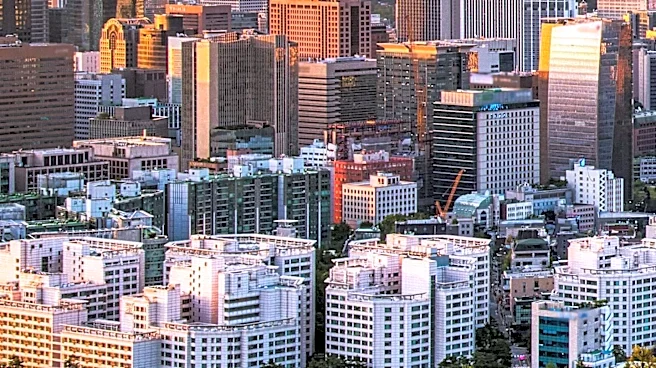
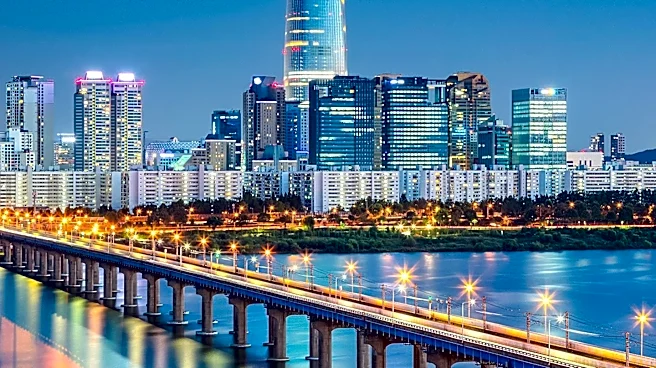
South Korean President Lee Jae Myung has drawn parallels between Japan's real estate crash in the early 1990s and current concerns about South Korea's housing market. In a public discussion, Lee highlighted the potential risks of an overheated real estate sector,
referencing Japan's 'lost decades' as a cautionary tale. The South Korean government is considering revising taxes to stabilize the housing market, which constitutes a significant portion of household wealth in the country. As of March 2025, real assets accounted for 75.8% of Korean household assets. Lee's administration aims to redirect household wealth from real estate to financial markets, although this strategy has seen limited success.
Why It's Important?
The South Korean housing market's stability is crucial for the country's economic health, as it represents a large share of household wealth. A potential real estate bubble could have severe economic consequences, similar to Japan's prolonged economic stagnation. The government's efforts to manage the housing market and encourage investment in financial markets are vital for maintaining economic balance and preventing a financial crisis. The situation also reflects broader global concerns about real estate markets and economic stability, particularly in regions with high property values.
What's Next?
The South Korean government is expected to continue its efforts to stabilize the housing market through policy adjustments and tax reforms. These measures may include stricter regulations on mortgage lending and incentives for investment in financial markets. The outcome of these policies will be closely watched by economic analysts and international investors, as they could influence market dynamics and economic growth in South Korea. Additionally, the government's approach may serve as a model for other countries facing similar real estate challenges.