





What's Happening?
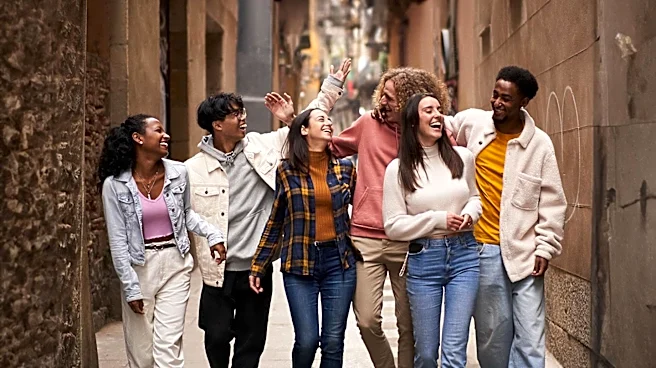
The concept of 'third places' is being reimagined to specifically address the needs of youth, focusing on creating social and civic spaces where young people can gather informally, develop relationships, and experience community outside of home and school.
This approach emphasizes environments where youth can 'be' without constant performance pressure, 'belong' without conforming to predetermined ideals, and 'become' on their own terms. The traditional view of youth spaces as merely rooms with programs or facilities for gathering is being challenged, advocating instead for spaces that foster genuine social and civic engagement. This perspective is particularly relevant in contexts like Singapore, where a five-year roadmap, the SG Youth Plan, includes the development of 12 youth spaces designed for meeting, exploring interests, building friendships, and organizing activities.
Why It's Important?
The reimagining of youth spaces as third places is crucial for the holistic development of young people and the strengthening of communities. By providing neutral, informal environments, these spaces offer a vital antidote to the pressures of academic and family life, allowing youth to explore their identities and interests freely. This fosters a sense of belonging and self-acceptance, which are critical for mental well-being and resilience. Furthermore, these spaces promote civic engagement by encouraging young people to shape their own activities and interact with diverse peers, thereby developing essential social and leadership skills. The shift from adult-designed programs to youth-led initiatives empowers young individuals, cultivating a generation that is more connected, confident, and contributing to society. This approach also helps bridge social divides and build stronger community ties by creating shared assets that benefit all youth.
What's Next?
The future of youth-focused third places will likely involve a continued emphasis on co-creation and youth-led initiatives. This means moving beyond traditional metrics like attendance and program completion to focus on whether young people feel safe, recognized, and able to shape their environments. Policymakers and community leaders may increasingly invest in developing spaces that are genuinely responsive to youth needs and preferences, incorporating elements that encourage informal interaction, creative expression, and peer-to-peer learning. There will be a growing need for resources and training to support adults in facilitating, rather than dictating, activities in these spaces. The success of initiatives like the SG Youth Plan could serve as a model for other regions looking to enhance youth engagement and community building through the strategic development of third places.
Beyond the Headlines
The deeper implications of reimagining youth spaces as third places extend to addressing broader societal challenges such as youth disengagement, mental health issues, and social fragmentation. By providing spaces where young people can authentically connect and develop, these initiatives can counteract the isolating effects of digital culture and academic pressures. Ethically, this approach underscores the importance of youth agency and self-determination, recognizing young people not just as recipients of services but as active contributors to their communities. Culturally, it promotes diversity and inclusivity by creating environments where different identities and interests can converge and thrive. In the long term, fostering such spaces can lead to more resilient, engaged, and innovative communities, as young people develop the social capital and civic skills necessary to navigate and shape their futures.