
What's Happening?
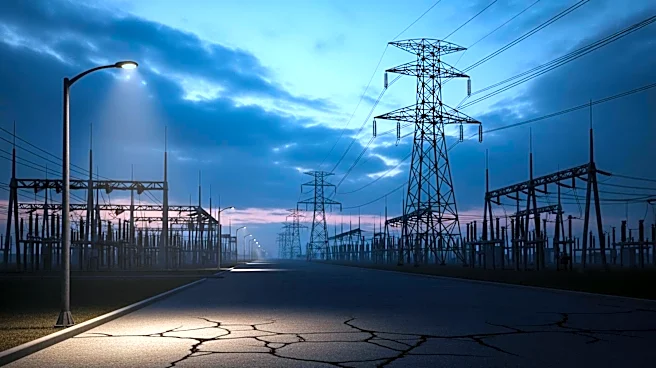
Cuba's national energy grid experienced a significant failure, resulting in widespread power outages across the island's eastern provinces. The collapse affected areas from Guantánamo to Ciego de Ávila,
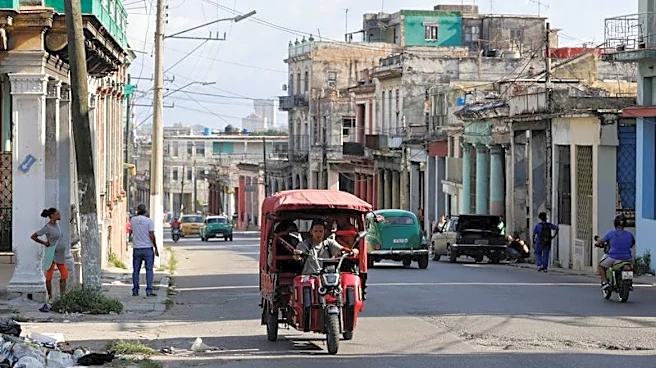
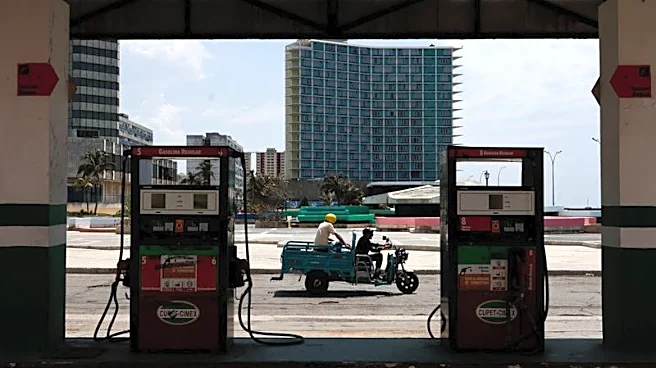
leaving residents without electricity. The state-run Electric Union is working to restore power but has not provided a timeline for when services will be fully restored. The situation in Havana remains dire, with ongoing blackouts and power rationing. The energy crisis has been exacerbated by a U.S. energy blockade and the depletion of oil supplies delivered by a Russian vessel in March. The Cuban government has attributed the outages to both the aging infrastructure and U.S. sanctions, which have intensified under President Trump's administration.
Why It's Important?
The power grid failure in Cuba highlights the vulnerabilities of the island's energy infrastructure and the broader geopolitical tensions affecting its economy. The U.S. sanctions, aimed at pressuring Cuba to release political prisoners and liberalize its economy, have compounded the challenges faced by the Cuban government. The blackouts have disrupted daily life, leading to reduced work hours, food spoilage, and even the cancellation of surgeries in hospitals. This situation underscores the critical need for energy security and infrastructure investment in Cuba, as well as the potential humanitarian impact of international sanctions.
What's Next?
Efforts to restore power in the affected regions are ongoing, but the timeline remains uncertain. The Cuban government may seek additional international support to address the energy crisis, particularly from allies like Russia. Meanwhile, the U.S. may continue to leverage sanctions as a tool for political change in Cuba. The situation could lead to increased domestic unrest, as evidenced by recent protests in Havana. The international community will likely monitor the developments closely, considering the potential for further geopolitical implications.
Beyond the Headlines
The energy crisis in Cuba also raises questions about the long-term sustainability of its energy policies and the need for diversification of energy sources. The reliance on oil imports, particularly from politically aligned nations, exposes Cuba to significant risks. The situation may prompt discussions on renewable energy investments and regional cooperation to enhance energy resilience. Additionally, the humanitarian impact of the crisis could draw attention to the ethical considerations of using sanctions as a political tool.