
What's Happening?
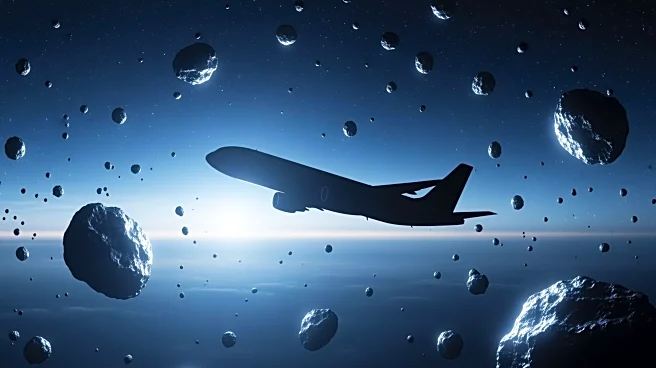
The risk of space debris impacting airplanes is increasing, according to experts. Space debris, which includes spent rocket stages and defunct satellites, re-enters Earth's atmosphere with growing frequency.
While most debris burns up upon re-entry, some fragments can survive and pose a risk to aircraft. A study from the University of British Columbia suggests a 26% chance that space debris will fall through busy airspace in the coming year. By 2030, the likelihood of a commercial flight encountering debris could be 1 in 1,000. The European Space Agency and other organizations are working to better predict and manage these risks, including when to close airspace to protect aircraft.
Why It's Important?
The potential impact of space debris on aviation safety is significant. Even small debris can cause catastrophic damage to aircraft, particularly if it impacts jet engines. The growing number of satellites and space operations increases the likelihood of debris re-entering the atmosphere. This poses a challenge for air traffic management, as closing airspace can lead to significant economic costs and flight disruptions. The need for improved prediction models and international coordination is critical to mitigate these risks and ensure aviation safety.
What's Next?
Efforts are underway to improve the prediction of space debris re-entry and its potential impact on air traffic. This includes developing better models to predict when and where debris will enter the atmosphere and how it will behave. International cooperation among space agencies and aviation authorities is essential to establish standards for airspace closures. The European Space Agency's upcoming DRACO mission aims to gather data on how debris disintegrates during re-entry, which could inform future safety measures.
Beyond the Headlines
The issue of space debris highlights the need for sustainable space operations and better debris management. As space activities increase, the risk of debris-related incidents will grow unless proactive measures are taken. This includes designing spacecraft to disintegrate more completely upon re-entry and improving international communication and coordination. The development of standards and guidelines for managing space debris risks is crucial to prevent potential disasters and ensure the safety of air travel.