



What's Happening?
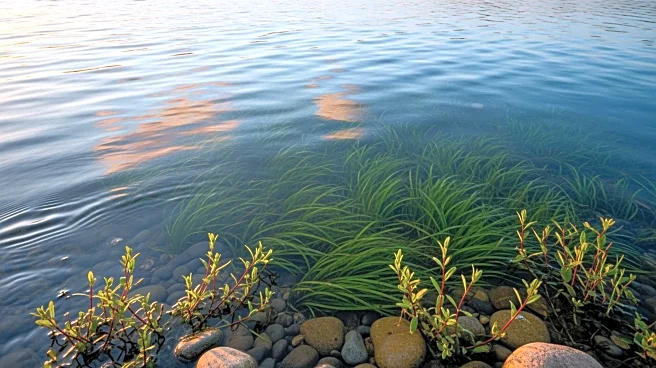
Durham Wildlife Trust has embarked on a seagrass restoration project in the rivers Aln and Don, aiming to revive the once-thriving seagrass meadows along the northeast England coastline. The project involves planting seagrass in custom-made frames to protect
the plants and facilitate their growth. This initiative follows previous plantings in the Tees Estuary and is part of the Stronger Shores project, which seeks to protect coastlines by working with nature. The seagrass, grown at a specialist nursery, is expected to improve water quality and provide habitat for marine species. The trials will continue until September, with further plantings planned at the Wansbeck Estuary.
Why It's Important?
Seagrass is a vital component of marine ecosystems, known for its ability to capture carbon and improve water quality. The restoration of seagrass meadows can significantly enhance biodiversity, offering habitat and food for various marine species. This project not only aims to restore lost habitats but also contributes to climate change mitigation efforts by sequestering carbon. Successful restoration could serve as a model for similar initiatives globally, highlighting the importance of preserving and restoring natural habitats to combat environmental degradation.