




What's Happening?
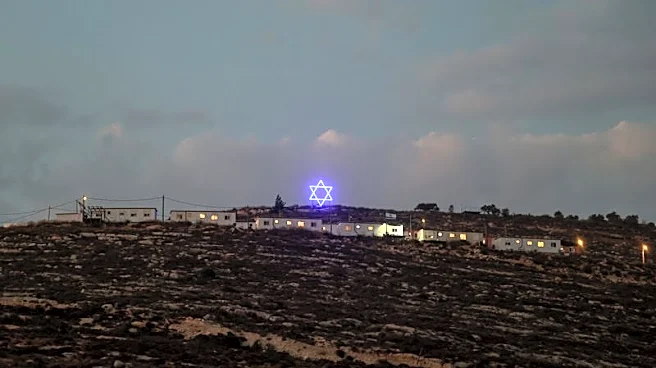
A young Israeli man was seriously wounded in a terror stabbing attack at the Maoz Yehuda Farm, near the Palestinian town of Osarin in central Samaria, on Monday morning. The victim sustained multiple stab wounds to his hand and upper body, with the knife
reportedly breaking during the assault. The terrorist fled the scene in a vehicle. Following the attack, Israeli Defense Forces (IDF) soldiers established roadblocks and initiated a manhunt. Approximately an hour later, soldiers located the terrorist near his vehicle outside the Palestinian town of Qabalan. The terrorist attempted to stab the soldiers, and an IDF commander responded with fire, eliminating him. Israeli Prime Minister Benjamin Netanyahu commended the troops for their swift action and wished the wounded farm owner a full and speedy recovery, reiterating Israel's commitment to eliminating terrorists and destroying their infrastructure in Judea and Samaria. Defense Minister Israel Katz emphasized a policy of vigorously pursuing Palestinian terrorism, developing Jewish settlements, and maintaining security stability in the region.
Why It's Important?
This incident underscores the ongoing security challenges and volatile situation in the West Bank, particularly in areas with Israeli settlements. The swift response by the IDF in eliminating the assailant highlights Israel's proactive approach to counter-terrorism, which often involves immediate and decisive action. For the U.S., a key ally of Israel, such events are significant as they impact regional stability and the prospects for peace. The incident also reflects the deep-seated tensions and cycles of violence between Israelis and Palestinians, which continue to complicate diplomatic efforts towards a two-state solution. The Israeli government's stated policy of strengthening Jewish settlements in Judea and Samaria, as articulated by Defense Minister Katz, is a point of contention internationally and further exacerbates these tensions. The event reinforces the narrative of continuous threats faced by Israeli citizens and the government's resolve to ensure their security, which in turn influences U.S. foreign policy considerations in the Middle East.
What's Next?
Following the attack, Yossi Dagan, head of the Samaria Regional Council, called for a full cordon of the area and a broad military operation to collect weapons and dismantle terrorist infrastructure. He also demanded the immediate closure of all roads in the area and accountability for anyone who assisted the terrorist. Prime Minister Netanyahu and Defense Minister Katz have ordered the IDF to prepare for an 'all-out campaign' against the Palestinian Authority and other terrorist infrastructure in Judea and Samaria if Ramallah turns its weapons against Israel. This suggests a potential escalation of military operations in the region, including targeted killings of senior figures and the evacuation of residents from areas used for terrorist activity. The Israeli leadership has explicitly stated that they will not allow a return to the reality of a prolonged intifada or the events of October 7, indicating a firm stance on security measures and a potential for increased military presence and operations in the West Bank.
Beyond the Headlines
The stabbing attack and the subsequent elimination of the terrorist highlight the complex interplay of security, settlement expansion, and political rhetoric in the Israeli-Palestinian conflict. The Israeli government's strong stance on developing Jewish settlements and its readiness for extensive military campaigns in response to attacks reflect a broader strategy aimed at asserting control and deterring future acts of violence. This approach, however, often draws international criticism and is seen by many as an impediment to peace. The incident also brings to the forefront the daily realities of life for both Israelis and Palestinians in the West Bank, where security concerns are paramount and the threat of violence is ever-present. The call for a 'full cordon' and 'broad military operation' by local Israeli leadership, coupled with the national government's directives, suggests a potential for increased friction and humanitarian concerns in the Palestinian territories. The long-term implications include a further entrenchment of positions, making a negotiated settlement more challenging, and potentially fueling a cycle of retaliatory actions.