



What's Happening?
Wisconsin's Republican U.S. lawmakers are showing a split in opinion regarding President Trump's proposal to issue $5,000 checks to every American adult if the GOP retains control of the U.S. House and Senate in midterm elections. While some, like U.S. Rep.
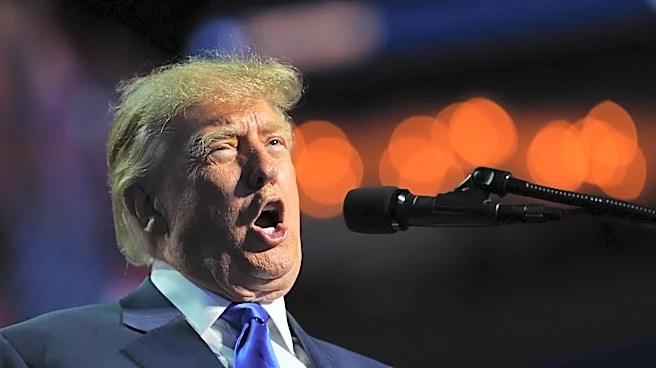
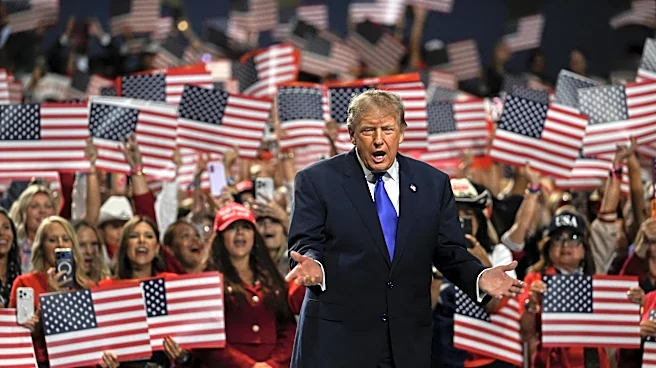
Tom Tiffany, support the idea as a means to return taxpayer money and address government waste, others, including U.S. Sen. Ron Johnson and U.S. Rep. Tony Wied, have expressed caution or hedged on the proposal. Senator Johnson stated his preference for budget legislation focused on national defense, farmers, and election integrity, rather than stimulus-like checks, citing concerns about the national debt. Representative Wied also emphasized providing relief to hardworking Americans while being mindful of the impact of government spending. Two other Republican members, Bryan Steil and Scott Fitzgerald, did not respond to inquiries about their stance. President Trump announced this plan at the GOP Midterm Convention, drawing immediate criticism from some who called it a 'socialist vote-buying scheme.'
Why It's Important?
The divergence among Wisconsin's GOP lawmakers on President Trump's $5,000 check proposal underscores a significant internal debate within the Republican party regarding fiscal policy and the role of government in economic relief. This split highlights the tension between populist appeals for direct financial aid and traditional conservative concerns about government spending and the national debt, which has surpassed $40 trillion. The differing stances could impact the unity and messaging of the Republican party in the upcoming midterm elections, potentially influencing voter perception and turnout. For Wisconsin, a state with a diverse economic landscape, the positions of its federal representatives on such a substantial economic proposal could have tangible effects on its citizens and industries. The debate also reflects broader national discussions on how to best manage economic challenges and provide support to the populace without exacerbating fiscal concerns.
What's Next?
The proposal for $5,000 checks is expected to remain a prominent topic of discussion as the midterm elections draw closer. The varying opinions among Wisconsin's GOP lawmakers suggest that achieving a unified stance on this issue will be challenging. The feasibility of implementing such a plan would depend heavily on congressional approval, which would require navigating these internal party divisions and potential opposition from Democrats. Political leaders, businesses, and civil society groups will likely continue to analyze the economic implications, including potential impacts on inflation and the national debt. The debate may also prompt alternative proposals for economic relief or tax reform from both political parties, as they seek to address voter concerns and shape the economic narrative leading up to the elections. The outcome of this discussion could influence future approaches to federal economic interventions.
Beyond the Headlines
The debate over President Trump's proposed $5,000 checks extends beyond immediate political maneuvering, touching upon deeper philosophical questions about economic governance and the social contract. The idea of a 'Trump Dividend' to compensate for government waste taps into public frustration with perceived inefficiencies and mismanagement of taxpayer funds. Conversely, the characterization of the proposal as a 'socialist vote-buying scheme' reflects a fundamental ideological clash over the appropriate scope and methods of government intervention in the economy. This internal Republican division highlights the ongoing struggle to reconcile different factions within the party—those prioritizing direct economic relief and those emphasizing fiscal conservatism. The long-term implications could include a re-evaluation of how economic stimulus is conceptualized and implemented, potentially leading to shifts in public expectations regarding government's role in individual financial well-being and the management of national debt.