








What's Happening?
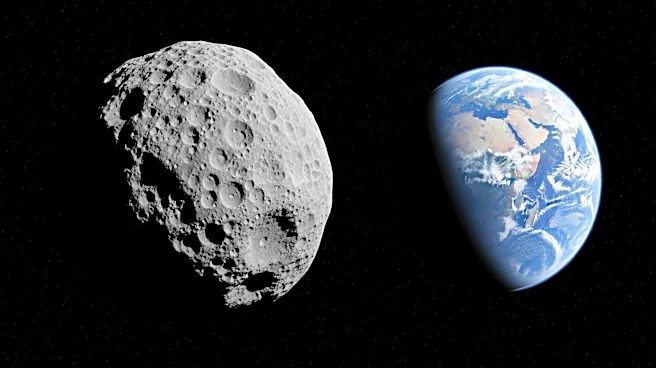
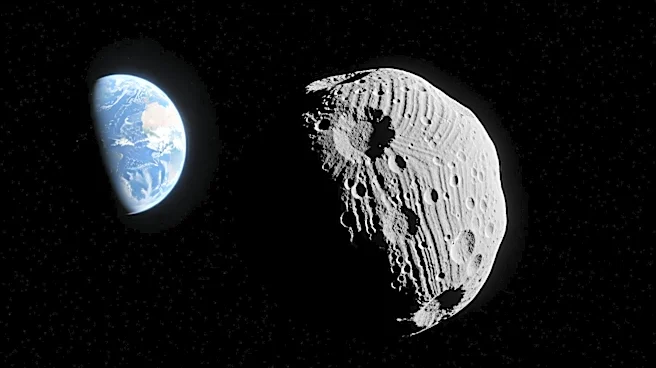
The asteroid Apophis, officially known as 99942 Apophis, is set to pass approximately 20,000 miles above Earth's surface on April 13, 2029. This close approach will allow scientists to observe the effects of Earth's gravity on the asteroid, potentially
altering its spin and surface. Initially considered a threat, Apophis is now seen as a unique opportunity for scientific study. Radar observations have ruled out any impact risk for the next 100 years, transforming the event into a rare chance to study asteroid dynamics and surface changes.
Why It's Important?
The close flyby of Apophis presents a significant opportunity for astronomers to study the effects of Earth's gravity on an asteroid. This event could provide insights into asteroid composition and behavior, contributing to our understanding of space weathering and planetary interactions. The observations could help refine models of asteroid dynamics, aiding future planetary defense strategies. The global scientific community is expected to engage in extensive observation efforts, utilizing both ground-based and space telescopes to gather data.
What's Next?
NASA's OSIRIS-APEX mission and the European Space Agency's Ramses mission are preparing to study Apophis during and after its flyby. These missions aim to capture detailed observations of the asteroid's surface and structural changes. The data collected will enhance our understanding of asteroid behavior and inform future exploration missions. The scientific community anticipates significant findings that could influence asteroid research and planetary defense strategies.