



What's Happening?
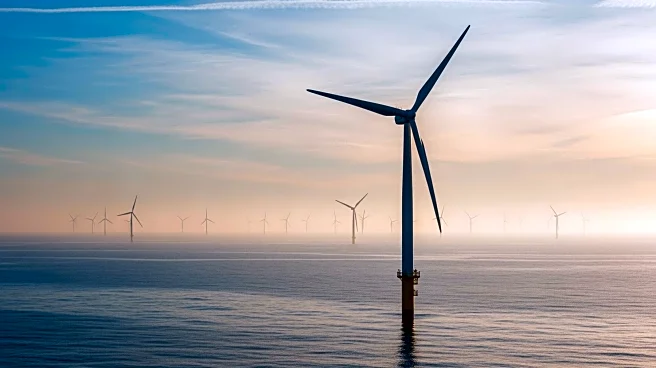
Vattenfall has confirmed its investment in the Nordlicht offshore wind cluster, set to become Germany's largest wind project. The project, located in the North Sea, will be constructed in two phases, with the first phase expected to begin monopile installation
in the third quarter of this year. Once completed, the project will add over 1.6 GW to Germany's energy supply, producing around 6 TWh annually. This development comes as Germany faces challenges in meeting its offshore wind energy targets, with recent allocation rounds receiving no bids, prompting a strategic reassessment.
Why It's Important?
The Nordlicht project is crucial for Germany as it seeks to expand its offshore wind capacity and reduce reliance on fossil fuels. The project represents a significant step towards achieving Germany's target of 30 GW of offshore wind capacity by 2030. It also highlights the broader challenges facing the offshore wind industry in Europe, including economic pressures and reduced interest in future projects. By securing renewable power for BASF's chemical production, the project also supports industrial decarbonization efforts, contributing to Europe's competitiveness and energy resilience.
What's Next?
Construction of the Nordlicht I phase is set to begin later this year, with the second phase, Nordlicht II, expected to start in 2027. Both phases are anticipated to be operational by 2028. The project will play a key role in Germany's energy transition, providing a substantial increase in renewable energy supply. As Germany adjusts its offshore wind strategy, future allocation rounds are planned for mid-year, with the next round expected in February. The project's progress will be closely watched as an indicator of the industry's ability to overcome current challenges.