







What's Happening?
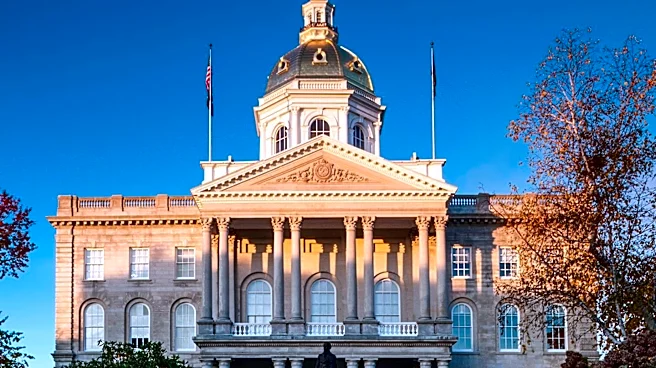
Candidates for the New Hampshire state Senate District 8, Republican Army veteran and state Rep. Jim Creighton and Democratic organic farmer and debate coach David Trumble, are presenting differing policy ideas as control of the state Senate is contested
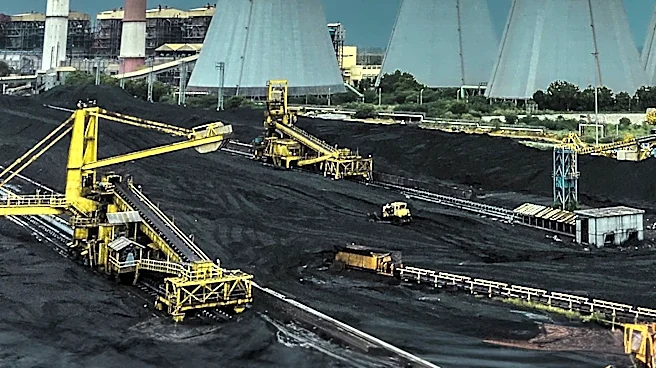
in November. Republicans currently hold a supermajority, but Democrats aim to reduce this lead or gain control. Both candidates identify the high cost of living as a primary concern for constituents. Creighton proposes a ballot measure to cap property taxes, while Trumble advocates for government intervention to address inflation, focusing on housing, childcare, and property taxes. On energy, Trumble supports expanding solar energy, while Creighton favors increasing pipelines, nuclear capabilities, and natural gas. Both also seek a new approach to higher education, with Creighton emphasizing functional degrees and Trumble advocating against budget cuts to higher education.
Why It's Important?
The contest for the New Hampshire state Senate District 8 is crucial as it reflects broader ideological battles that could shift the balance of power in the state legislature. If Democrats manage to chip away at the Republican supermajority or gain control, it could lead to significant policy changes across various sectors. The differing approaches to the cost of living, energy, and higher education highlight the distinct priorities of each party. Creighton's focus on property tax caps appeals to fiscal conservatives and those burdened by local taxes, while Trumble's emphasis on government intervention for inflation and social programs aligns with progressive ideals. The energy policy debate between solar expansion and increased fossil fuel/nuclear reliance reflects national discussions on climate change and energy independence. The outcome of this and similar races will determine the legislative agenda and the direction of state policy in New Hampshire for the coming years, impacting residents' daily lives and the state's economic future.
What's Next?
The immediate next step is the November General Election, where voters in District 8 and across New Hampshire will decide the composition of the state Senate. The outcome of this election will directly influence the legislative priorities and policy debates in the upcoming session. If Republicans maintain their supermajority, they will likely continue to advance policies aligned with their current platform, such as property tax caps and traditional energy expansion. If Democrats gain ground, there could be increased legislative efforts towards addressing inflation through social programs, expanding renewable energy, and increasing funding for higher education. Both candidates will continue their campaigns, engaging with voters to articulate their visions. The results will also be closely watched by state political parties as an indicator of voter sentiment and potential trends for future elections.
Beyond the Headlines
The policy differences articulated by Creighton and Trumble reflect a national divergence in approaches to economic challenges and resource management. The debate over property taxes versus broader inflation relief touches upon fundamental questions of how government should intervene in the economy and who bears the burden of economic fluctuations. Similarly, the energy debate between solar and traditional sources highlights the ongoing tension between environmental sustainability and energy security/affordability. The discussion on higher education funding and curriculum also points to broader societal concerns about workforce development and the value of post-secondary education. This local election, therefore, serves as a microcosm of larger national policy debates, illustrating how these issues manifest at the state level and directly impact local communities. The outcome could influence how New Hampshire positions itself economically and environmentally in the coming decade.