







What's Happening?
Douglas County’s Little River Landscape Resiliency Project is set to receive $1.29 million from the Oregon Department of Forestry (ODF). This funding is part of a larger $10 million state investment aimed at reducing wildfire risk across Oregon. The specific
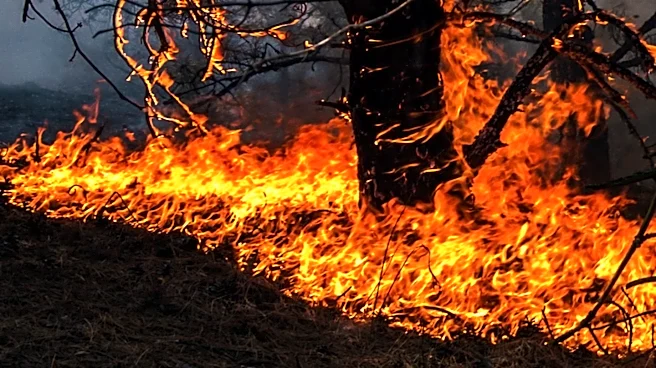
work in Douglas County will focus on creating fuel breaks along Lane Mountain, the Little River drainage, and Cavitt Creek. These fuel breaks involve reducing vegetation to create areas with less combustible material, thereby giving firefighters more strategic options during wildfire responses. The project is one of three initiatives sharing the $10 million state funding, collectively covering over 6,400 acres in Douglas, Grant, Jackson, and Josephine counties. The ODF emphasizes that these efforts will improve firefighter access and decrease wildfire intensity in high-risk zones. This initiative aligns with Oregon’s 20-year landscape resiliency strategy, which coordinates forest management across public, private, and Tribal lands, incorporating methods such as thinning, brush removal, prescribed burns, and planting suitable trees.
Why It's Important?
This investment is crucial for enhancing wildfire resilience in Oregon, a state frequently impacted by severe wildfires. By creating fuel breaks, the project directly addresses the immediate threat of uncontrolled blazes, protecting communities and natural resources. The strategic placement of these breaks along key geographical features like Lane Mountain and the Little River drainage will provide critical advantages to firefighting efforts, potentially saving lives and property. Furthermore, the broader state investment underscores a proactive approach to forest management, moving beyond reactive firefighting to preventative measures. This strategy not only mitigates the destructive power of wildfires but also promotes healthier forest ecosystems by reducing overcrowding and encouraging species better adapted to local conditions. The coordination across various land types—public, private, and Tribal—highlights a comprehensive and collaborative effort essential for effective large-scale environmental management, setting a precedent for other regions facing similar challenges.
What's Next?
The Douglas County project will proceed with the implementation of fuel breaks along Lane Mountain, the Little River drainage, and Cavitt Creek. This work is part of ongoing efforts under Oregon’s 20-year landscape resiliency strategy. The ODF will continue to support planning among state and federal agencies, local partners, and landowners to identify future priority areas for similar projects. Landowners and organizations interested in participating in these landscape resiliency initiatives are encouraged to contact their local ODF office. The success of these initial projects, such as the treatments near Black Butte Ranch that aided firefighters during the Akawa Butte Fire, will likely inform and encourage further investment and expansion of such preventative measures across the state. The ODF anticipates that these efforts will lead to continued improvements in wildfire response capabilities and long-term forest health.
Beyond the Headlines
The initiative in Douglas County reflects a broader shift in wildfire management philosophy, moving from suppression-focused tactics to a more holistic, preventative approach. This involves recognizing the ecological role of fire and integrating controlled burns and strategic fuel reduction as essential tools for forest health. The collaboration between state agencies, local partners, and landowners also highlights the complex socio-ecological dimensions of wildfire management, where community engagement and shared responsibility are paramount. This approach acknowledges that effective wildfire mitigation requires not only scientific expertise but also local knowledge and collective action. The long-term implications include not only reduced wildfire risk but also the potential for more resilient ecosystems, improved air quality, and sustained economic benefits from healthier forests, demonstrating a sustainable model for managing natural resources in an era of increasing climate variability.