







What's Happening?
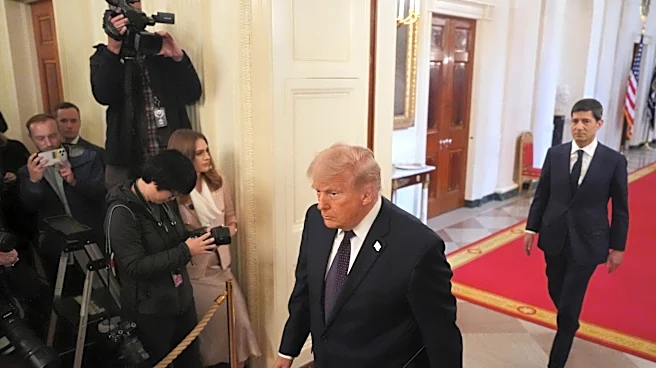
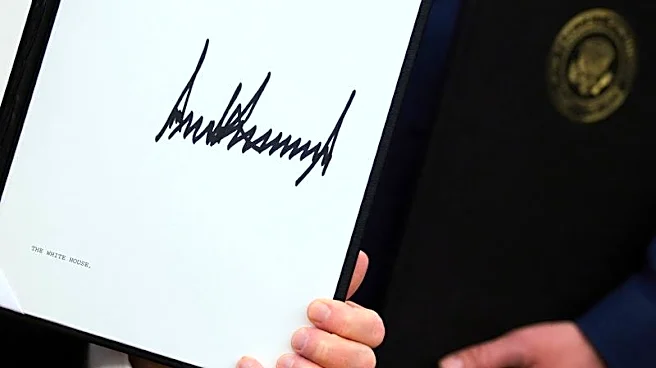
President Trump has signed an executive order that outlines a hands-off approach to managing cybersecurity threats posed by artificial intelligence (AI). The order, signed on June 2, allows the U.S. government voluntary access to AI models for a 30-day
review period, rather than mandating safety tests. This directive aims to facilitate a closer relationship between AI companies and government agencies, such as the National Security Agency (NSA) and the Department of Defense, to develop standards for early government access to advanced AI models. The order was initially delayed due to concerns about its potential impact on U.S. competitiveness in the AI sector, particularly against China. The administration's decision comes in the wake of Anthropic's Mythos model, which has demonstrated significant capabilities in identifying network vulnerabilities, raising global cybersecurity concerns.
Why It's Important?
The executive order is significant as it reflects the administration's strategy to balance innovation with security in the rapidly evolving AI landscape. By opting for a voluntary framework, the order seeks to protect technological advancement while ensuring that government agencies can access and evaluate AI models for potential cybersecurity risks. This approach could influence how AI companies engage with federal agencies, potentially setting a precedent for future AI governance. The decision to avoid mandatory licensing or permitting mechanisms underscores a commitment to fostering innovation without stifling competition, particularly in the context of global AI development races. The order's emphasis on collaboration between AI developers and government entities could lead to enhanced cybersecurity measures across critical infrastructure sectors.
What's Next?
Following the executive order, AI companies are expected to engage more actively with government agencies to facilitate the voluntary review process. The NSA and other departments will work on establishing benchmarks for determining the readiness of AI models for government access. The order also calls for the Department of Defense to enhance its cybersecurity measures through private sector collaboration, although specific partnerships have not been detailed. As the order is implemented, stakeholders will likely monitor its impact on AI innovation and cybersecurity practices, with potential adjustments based on industry feedback and evolving security needs.
Beyond the Headlines
The executive order raises questions about the long-term implications of voluntary government access to AI models. While it aims to protect innovation, the lack of mandatory safety testing could lead to debates about the adequacy of current cybersecurity measures. The order's provisions may also influence international discussions on AI governance, as other countries observe the U.S. approach to balancing security and innovation. Additionally, the directive's focus on voluntary participation highlights the ongoing tension between regulatory oversight and industry autonomy in the tech sector.